
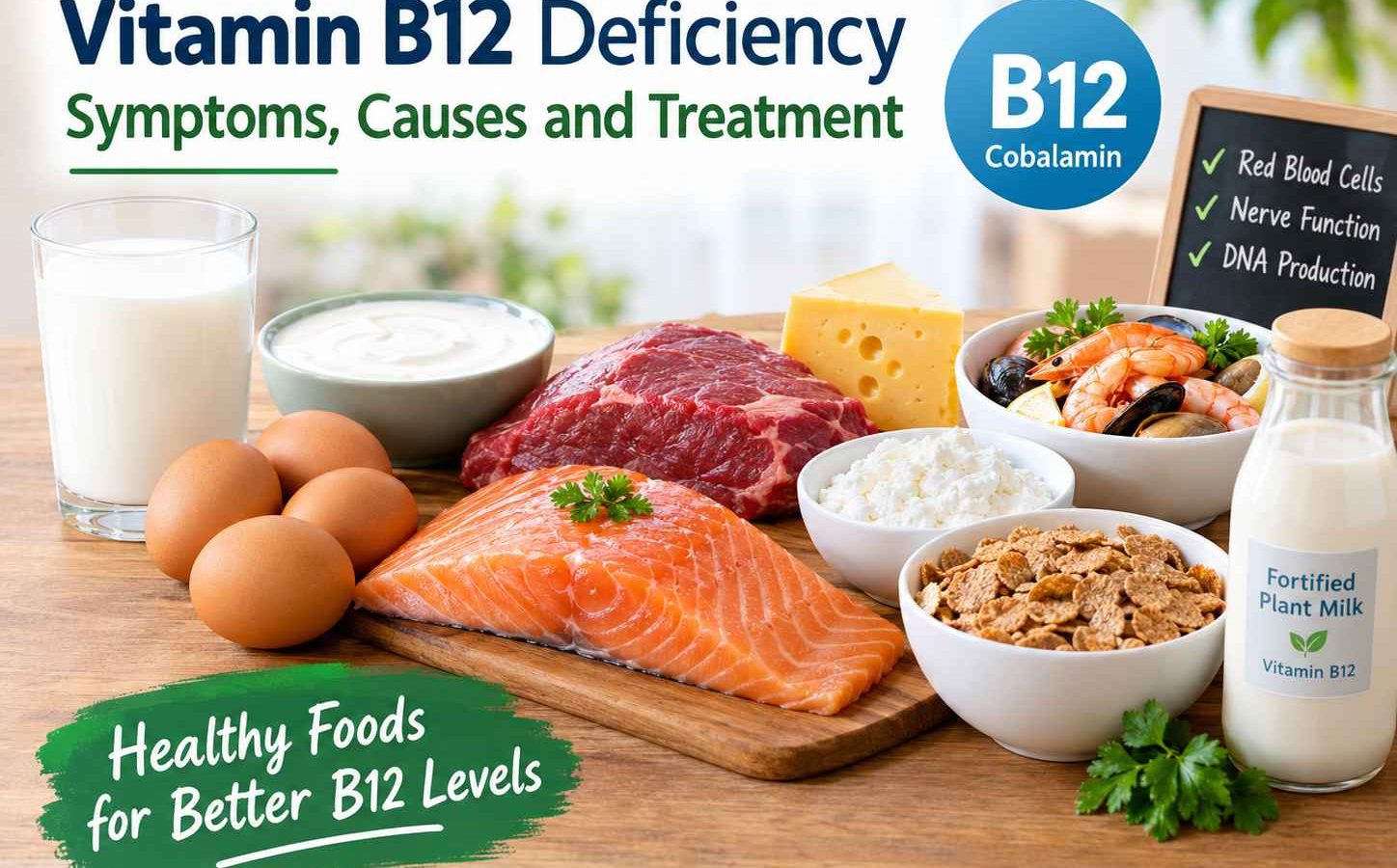
Cobalamin Deficiency Causes, Symptoms & Remedies
Vitamin B12 deficiency: Symptoms, causes and treatment
Vitamin B12 deficiency, also known as cobalamin deficiency, occurs when the body does not have enough vitamin B12 to carry out important functions. This nutrient helps make healthy red blood cells, helps nerve function and helps make DNA. A deficiency of vitamin B12 can cause fatigue, anemia and neurological disorders.
The importance of early detection of cobalamin deficiency is because untreated deficiency can sometimes result in permanent nerve damage. Symptoms, causes, diagnosis and treatment will help you to learn and to respond appropriately to protect your health.
What Is a Deficiency of Cobalamin?
Vitamin B12 (cobalamin) is a water-soluble vitamin naturally found in foods of animal origin and added to some fortified foods. The body needs it to make red blood cells and keep the nervous system healthy.
If you are low in vitamin B12, your body may not be able to produce normal red blood cells. It may lead to megaloblastic anemia. Even in the absence of anemia, nerve symptoms may develop.
Cobalamin deficiency Common symptoms

Signs and symptoms of cobalamin deficiency may be subtle and vary between individuals. Some may only notice small changes initially.
Common symptoms include:
- Chronic fatigue, weakness or low energy level
- Skin that is pale, or difficulty breathing
- Headaches or dizziness
- Smooth or sore red tongue
- Tingling or numbness of the hands and feet Difficulty concentrating or remembering things
- Problems with walking or changes in balance
- Loss of appetite or losing weight without explanation
These symptoms can be caused by other medical conditions. If symptoms continue, seek medical advice, especially if you experience numbness, balance problems or changes in memory.
For more information, read our article on-low carb meal For Healthy Daily Eating
What leads to a Cobalamin Deficiency?
There are numerous reasons for a person to be deficient in vitamin B12.
1.Low consumption of dietary
Fish, meat, eggs, milk and other dairy products are natural sources of vitamin B12. This risk may be increased in individuals eating vegan or other restricted vegetarian diets and who do not eat enough reliable fortified foods or the proper supplements.
Poor absorption of vitamin B12
Some people have a problem with vitamin B12 in that they eat enough of it but their bodies do not absorb it properly. Absorption can be interfered with by problems with the stomach or small intestine. Pernicious anemia is an autoimmune disease affecting intrinsic factor and thus vitamin B12 absorption is also impaired.
Certain medicines
Long-term use of metformin and proton pump inhibitors can impact vitamin B12 levels. Do not stop taking any of your medication without talking to your health care professional.
Digestive issues or surgery
Gastrointestinal disorders and surgery on the stomach or small intestine can lead to a decrease in absorption of vitamin B12. People with these risk factors may need medical attention.
How to diagnose Vitamin B12 deficiency?
Most often, doctors will look at your symptoms, your medical history, your diet and blood tests. The tests may include a blood count and a measurement of the level of vitamin B12.
If the first results are unclear, other tests, such as methylmalonic acid (MMA), can be useful in clarifying the diagnosis. A health professional will look at the results, your symptoms, and other relevant information.
You should not use your symptoms alone to know if you have a deficiency.
For more information, read our article on-Best High Protein Foods
Treatment of Cobalamin Deficiency
The treatment depends on the severity of the deficiency and the cause. A healthcare professional might suggest vitamin B12 tablets, other supplements that need a prescription or injections
Those with a dietary deficiency may benefit from increasing their intake of foods rich in vitamin B12 or fortified foods. If you have trouble absorbing nutrients, you may require injections or a special treatment plan. Sometimes therapy will need to be continued for a long period of time.
Getting treatment early can make many symptoms better and can stop more problems from coming up. Nerve damage from long-term deficiency, however, may not be reversible in all cases.
Eat These Foods to Keep Your Vitamin B12 Levels Healthy
You can keep your vitamin B12 levels normal by eating good sources of vitamin B12.
Think about things such as:
- Fish and shellfish (seafood)
- Meat and poultry
- Eggs Milk Yogurt Cheese
- Breakfast cereals fortified with vitamin B12
- Fortified plant-based milk or other fortified foods
Vegans in particular should make sure they get enough fortified foods and take supplements as needed. Check the labels of the products. Vitamin B12 doesn’t occur naturally in all plant-based foods.
For more information, read our article on-supplemental vitamins for vegetarians
FAQ
What is the difference between vitamin B12 deficiency and cobalamin deficiency?
Yes. Cobalamin is the scientific name for vitamin B12 so they are both talking about the same deficiency.
can low cobalamin cause fatigue?
Yeah. Low levels of vitamin B12 can cause anemia, which can lead to fatigue, weakness, dizziness and shortness of breath.
Do vegetarians develop vitamin B12 deficiency?
“Yeah. Vegetarians and vegans may be at increased risk if they do not get enough vitamin B12 from fortified foods or supplements.
Treatment of cobalamin deficiency
Yes. In most cases it can be treated by giving the right amount of vitamin B12. The treatment and the length of treatment is determined by the cause and if absorption is affected.
When to consult a doctor
If you have chronic fatigue, unexplained weakness, or other possible signs of deficiency, see your doctor. If the nervous system is affected by vitamin B12 deficiency and not treated, numbness, tingling, balance problems or memory changes should be evaluated quickly.
Conclusion
Cobalamin deficiency can impact your energy, nerve health and red blood cell production. Awareness of risk factors, early medical assessment and a healthy diet can help recognition and management of the condition.
If you suspect you have a vitamin B12 deficiency, get properly tested and treated by the right healthcare professional, not just supplements.
Medical Disclaimer: This article is for educational purposes only and is not intended to be a substitute for professional medical advice, diagnosis, or treatment.