Calisthenics Exercises For A Basic Full Body Workout – 8 Exercises
What Are Calisthenics Workouts
Calisthenics workouts are exercises that use your body weight as the primary means of resistance. They can help to build strength, balance, coordination, mobility and body control without having to have a full gym equipment.
Many calisthenics exercises need no or very little equipment, which makes it convenient for people who like to work out at home, outdoors or just prefer simple training routines.
You can get a basic calisthenics workout that covers your legs, chest, shoulders, arms, back and core. You can also change many of the movements to your fitness level.
Beginners are not supposed to do fancy tricks right away. Learn the basic movement patterns, keep good technique, and slowly increase the challenge.
Advantages of Calisthenics Training
There are a number of benefits to fitness when you do body weight training regularly.
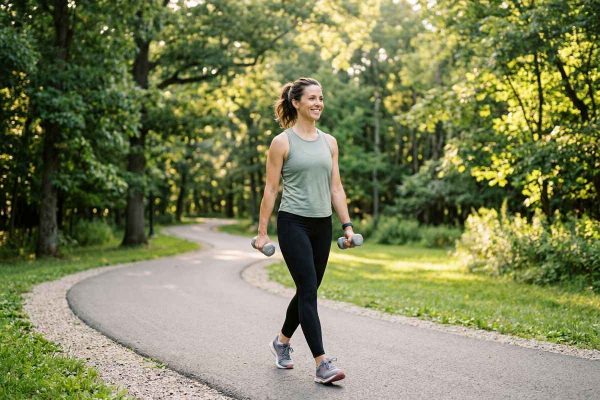
Read more- Benefits & tips for walking with weights
Builds Functional Strength
Many calisthenics moves work many muscle groups simultaneously. Exercises like squats, pushups and lunges can help build strength to support everyday movements.
Needs Little Equipment
Simplicity is the greatest advantage of calisthenics. Many exercises require only your body weight and enough space to move safely.
You can calisthenics Exercise at home, in a park or on the move.
Better Body Control
When you perform body weight exercises, you’ll often need to stabilize your body. This can lead to better coordination, balance and awareness of movement over time.
simple to modify
Most basic calisthenics exercises have easier and harder variations.
A beginner could start with wall push-ups then move onto incline push-ups and then standard push-ups.
8 Calisthenics Exercises For An Easy Workout
These body weight exercises focus on a lot of the big movement patterns. You can combine them in a simple full body routine.
Body weight Squats

bodyweight-squat-proper-form
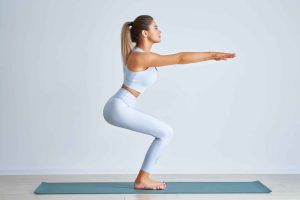
One easy way to work out the lower body without equipment is to do body weight squats.
They primarily work the muscles in your thigh, hip and glute, but your core also needs to work to help stabilize your body.
How to perform a body weight squat:
- Position your feet about shoulder-width apart.
- Keep your chest up comfortably.
- Flex your knees and drive your hips back.
- Control yourself down to your limit.
- Keep your feet on earth.
- Push through your feet to return to standing.
Start with 8-15 reps.
If regular squats are hard, make it shallower or use a sturdy support to hold on to for balance. If they get easy you either add reps or progress to a harder variation.
Read more-Dumbbell Exercises for Strength & Mobility Every Day-10 example
Chest push ups

beginner-push-up-exercise
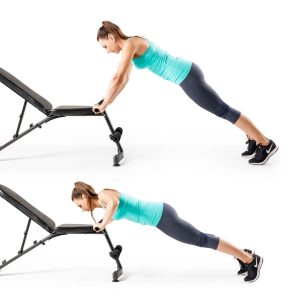
Pushups are a classic body-weight exercise that work your chest, shoulders, triceps and core muscles.
Push up How to do a push up:
- Place your hands slightly wider than shoulder width.
- Now bring your legs back behind you.
- Try to maintain a pretty straight line through your body.
- Bend your elbows and sink your chest to the floor.
- Push through your hands to return to the start position.
- Do as many controlled reps as you can while still maintaining good form.
- Change for starters: Push against a wall or other stable raised object.
As you get stronger, work up to regular push-ups on the floor.
Reverse lunges
reverse-lunge-bodyweight-exercise
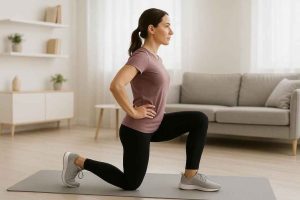
Lunges are good for developing lower-body strength and coordination. Reverse lunges are a comfortable starting variation for many novices.
How To Do A Reverse Lunge:
- Stand up straight with your feet comfortably apart
- Step back.
- Bend your knees and drop down.
- Do not move your lead foot.
- Push off the front foot to return to starting position.
- Repeat on the other side.
- Perform 6-12 reps on each side.
Use a wall or other sturdy support if you need help with your balance.
Hip Thrusts
glute-bridge-bodyweight-exercise
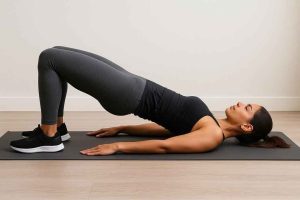
Glute bridges are fantastic for working the muscles around your hips and glutes, but they require a little core strength too.
These are a great addition to a basic body-weight workout.
How to perform a glute bridge:
- Lie on back with knees bent.
- Keep your feet flat on the ground.
- keep your arms relaxed at your sides.
- Suck in your stomach a bit.
- Raise your hips up toward the ceiling.
- Stop at the top for a sec
- Let your hips down gently.
10 to 15 repetitions.
Don’t over-arch your back. Your hips should do most of the work.
Plank (Plank)
plank-exercise-for-core-strength
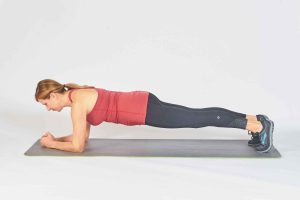
The plank is an isometric exercise that targets the core and supporting muscles.
You remain in one position instead of going through repeated range of motion .
Read more–Core Exercises for Every Fitness Level
Basic plank instructions:
- Place your forearms on the floor.
- Stretch your legs out behind you.
- Maintain your body in a comfortable, straight line.
- Engage your core softly.
- Unknot the neck.
- Keep your position with proper form.
10-20 seconds is a good starting point for beginners, then slowly increase the length.
If the full plank is too much, do a modified plank with your knees on the floor.
Bird Dog
bird-dog-core-stability-exercise
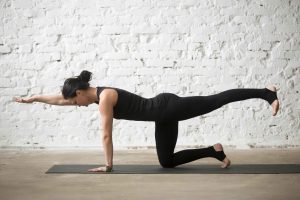
The bird dog is a combination of balance, core stability and controlled movement.
This can be very useful for people who are starting out and want to work on their coordination without using any weights.
How to perform a Bird Dog:
- Get down on your hands and knees.
- Keep your back straight.
- Put your arm out in front of you.
- At the same time reach your opposite leg back behind you.
- Stop for a moment but keep your balance.
- Back to square one.
- Reverse and repeat.
Do 6 to 10 repetitions on each side.
Instead of rushing through the exercise, take your time.
Calf Raises
Calf Raises Calf raises are a simple lower-leg exercise that requires almost no equipment.
How to perform calf raises
- Stand with feet shoulder width apart.
- If you need balance, keep a steady surface.
- Lift your heels off the floor, slowly.
- Hold briefly at the top.
- “Lower your heels under control.
Go for 12 to 20 reps.
When the movement becomes easier, you can increase repetitions or move to a single leg variation if appropriate.
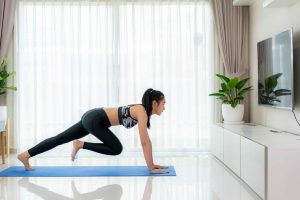
Climbing Mountains
Mountaineers use body-weight resistance along with movement. They can also raise your heart rate and challenge your shoulders, core, hips and legs.
How to do mountain climbers:
- Begin in a high plank position.
- Keep your hands under your shoulders or slightly outside them.
- Lift one knee toward your chest.
- Return the foot to the initial position.
- Reverse with other leg.
- Keep going at a steady pace.
The beginner need not try to move quickly; he can take the movement slowly.
Start with 15-30 seconds and then take a break.
How to Create a Basic Calisthenics Workout
You don’t have to spend a long time on each exercise. A few movements can be combined to form a simple routine to train the whole body.
Calisthenics Exercise for Beginners
Use this simple structure:
- Squats (bodyweight) – 10-15 reps
- 8-12 reps wall or incline pushups
- Reverse Lunges: 6-10 reps per side
- 10-15 reps glute bridges
- Bird dogs: 6–10 reps each side
- Plank: 10-20 seconds
- Calf raises 12-20 reps
- Mountain climbers: 15-30 sec
Rest between exercises as necessary.
You can do one round at first. When you get fitter, you can try two or three rounds over. Make sure your technique is good.
How Often Should You Do Calisthenics?
How often you work out depends on how fit you are, how hard you work out and how active you are overall.
As a beginner you can start with 2 or 3 calisthenics sessions a week and you have time for recovery in between the harder sessions.
On other days you can do light activities such as walking, mobility work or recreational activities.
It’s better to be consistent than to try and do hard workouts every day.
How to Make a Calisthenics Workout Harder
One advantage of calisthenics is that you can make exercises harder and harder without needing heavy weights.
You can make the challenge easier by:
- Adding reps
- More Sets
- Reduce the transport speed
- Increasing range of motion when appropriate
- Cutting the rest periods down slowly
- Moving on to a more challenging exercise variation
- Enhancing movement control
For instance, you could go from wall push-ups to incline push-ups to regular push-ups.
Work your way up instead of jumping into the advanced moves too soon.
Frequent Mistakes by Beginners
Too Much, Too Soon
It is harder to be consistent if you begin with a very hard routine.
Do exercises suitable to your level of knowledge.
Give Up Form for Repetitions
More reps aren’t necessarily better if your technique breaks down.
Controlled movements, stop a set when you can no longer maintain good form.
Not Doing The Warm Ups
Light movement for a few minutes can help prepare your body for exercise.
Warm up before your main workout with some walking, gentle marching, arm circles and light bodyweight movements.
Ignoring Recovery:
Rest is a crucial component of training. Your body needs time to recover after a tough workout.
Adequate sleep, healthy eating, hydration and rest days can support your overall fitness program.
Weight Training vs Calisthenics
Calisthenics and weight training are both forms of resistance exercise.
Calisthenics is a great way to use your own body weight and minimal equipment. In weight training, the resistance comes from something outside you—like dumbbells, barbells or machines.
You don’t have to pick one.
Your ideal fitness routine could be a mix of bodyweight and resistance exercises based on what you want to achieve, what you like and what equipment you have access to.
Safety Tips for the Novice
Ensure that you have enough room to move about before you begin working out.
Keep these things in mind:
- Try some easy variations first.
- Warm up before you work out.
- Move in a controlled way.
- Don’t work out with a sharp, unusual pain.
- If you are feeling too tired rest.
- Exercise Support Use Strong Surfaces
- Increase the difficulty gradually.
If you have an injury or medical condition or are concerned whether a particular exercise is appropriate for you, consider consulting a qualified healthcare professional first.
FAQs
Best calisthenics for beginners?
Body weight squats, wall push-ups, reverse lunges, glute bridges, bird dogs, planks, calf raises and modified mountain climbers are some beginner-friendly options.
Yes, calisthenics can be done at home.
Yeah. Most basic calisthenics exercises require little or no equipment which makes them easy to do at home.
Is calisthenics good for strength training?
Yes. If the calisthenics Exercises are challenging enough and done consistently, bodyweight training can build strength.
How many days a week should I do calisthenics?
Beginners can usually start with two or three sessions a week and then adjust their schedule up or down according to recovery and fitness level.
Does calisthenics help with weight management?
Calisthenics is a type of exercise . It can increase energy expenditure . It works best when used in conjunction with an overall lifestyle that includes balanced nutrition, regular activity, sleep and recovery for healthy weight management.
Do I need any equipment to do calisthenics?
Nope. Many basic calisthenics moves only require your own body weight. Optional equipment is resistance bands or a pull up bar to add more exercise options.
How long is a calisthenics workout?
A simple workout can be very short. For beginners, it might be only 20-30 minutes, including warm-up and rest periods, and you can increase the duration as you get fitter.
Final Thoughts
Calisthenics are a simple way to build strength, coordination, balance and general fitness using only your body weight. You don’t need to pay for an expensive gym membership or complicated equipment to begin.
The guide’s eight exercises are a good balance to start from for beginners. A full body workout that includes squats, push ups, lunges, glute bridges, planks, bird dogs, calf raises and mountain climbers.
Start at a level you can manage, work on good technique and build the challenge as you get more comfortable.
The best workout is one you can do safely and consistently over time.

One thought on “Calisthenics Exercises For A Basic Full Body Workout – 8 Exercises”
Comments are closed.