

Best Skincare Routine for Dry Skin: A Step-by-Step Guide
Introduction
Dry skin can feel tight, rough, flaky, or uncomfortable, especially after washing your face or when you are out in dry weather. A good skin care routine can help support the skin barrier, and reduce moisture loss.
The trick is not to use too many products. Instead, opt for gentle cleansing, regular moisturizing and daily sun protection. Utilizing products made for dry or sensitive skin can also help avoid unneeded irritation.
This guide outlines a straightforward skincare regimen for dry skin, covering morning and evening steps, ingredients to seek out, common errors to steer clear of, and advice for skin that feels and looks comfortable and hydrated.
Note: Each person’s skin has different needs. If you’re dealing with chronic dryness, painful cracking, intense itching, redness or you have a diagnosed skin condition, you might want to consult a dermatologist.
Why do skin get dry??
Dry skin is when your skin does not retain enough moisture. Weather, low humidity, hot water, washing too often, harsh cleansers and some skincare products are just some of the reasons that can lead to dryness.
The skin barrier is weakened, and water can leave the outer layer of skin more easily. This can lead to tight, rough or irritated skin.
So, a consistent skincare routine for dry skin has to be about supporting the skin barrier again and again, not stripping the skin.
Common Symptoms of Dry Skin
Dry skin may look or feel:
- Tight after cleansing.
- Crusty or flaky.
- Dull or unpleasant
- More sensitive than normal
- Subject to occasional moods of irritability
- More noticeable around the cheeks, lips and other dry spots
These signs do not occur in everyone with dry skin.
Read More-Natural Detox Drinks To Start Healthy Morning
Morning Routine for Dry Skin

A basic morning routine can help to prepare your skin for the day, while minimising the loss of unnecessary moisture.
Step 1: Select a Gentle Cleanser
If your skin needs cleansing, begin your morning with a gentle, non-stripping cleanser.
Avoid very hot water as it can cause more dryness and irritation. Instead, use lukewarm water and cleanse gently without vigorous rubbing.
If your skin feels especially dry in the morning, some people may prefer a very gentle cleansing rather than repeating washing with a strong cleanser.
What to Look For
- Look for products with the label:
- Mild cleanser
- Hydrating Cleanser.
- Cream Cleanser:
- Allergy tested fragrance free cleanser for sensitive skin
The best option depends on your skin and the rest of your routine.
Step 2: Apply a Moisturiser

Once you have cleaned your face, you can add a hydrating serum or essence if you want an extra layer of moisture.
Common hydrating ingredients in skincare are:
- Glycerin
- Hyaluronan
- Panthenol
- Aloe vera
Remember, you don’t need a serum to have an effective routine. For many people, a good moisturiser may be all that’s needed.
Step 3: Use a Moisturiser
For dry skin, moisturiser is one of the most important parts of a skincare routine.
Choose a moisturiser with ingredients that hydrate skin and support the skin barrier. Useful ingredients may be, depending on the formula:
- Ceramides
- Glycerol Hyaluronic acid
- Squalane
- Petrolatum
- (Vaseline)
- sheabutter
Creams and ointments tend to be richer than light lotions, so they may be helpful for extremely dry areas.
When possible, apply moisturiser to slightly damp skin. This can help to reduce post-cleansing moisture loss.
Step 4: Use Sunscreen
Complete your morning routine with broad-spectrum sunscreen.
Daily sun protection is important, as ultraviolet radiation can cause premature skin ageing and skin damage. Choose a sunscreen that is comfortable enough so that you will apply it consistently.
If you have sensitive skin, you might want to look for a sunscreen that is made for sensitive skin.
Read more–What Happens If You Walk for 30 Minutes Every Morning?
Nighttime Skincare Routine for Skin Type: Dry
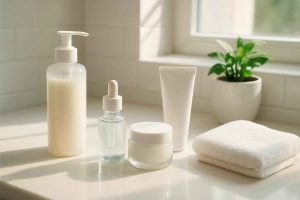
You can make your nite time routine about cleansing away sunscreen, makeup, dirt and other buildup while helping overnight skin care.
Step 1: Get rid of makeup and sunscreen
Remove makeup or water-resistant sunscreen gently before cleansing.
Do not rub vigorously, especially around the eyes and other delicate areas.
Step 2. Clean Thoroughly
Wash with a mild cleanser and warm water.
A good cleanser will lift away the dirt and debris, but won’t leave your skin feeling tight or uncomfortable.
If you notice that your skin is dry right after cleansing, take a minute to think about whether your cleanser is too harsh, or if you’re cleansing too often.
Step 3: Add moisturising ingredients
If you use a hydrating serum, apply it after cleansing.
Products with glycerin, hyaluronic acid or panthenol can provide extra hydration, depending on the formula.
If you have sensitive skin, introduce one new product at a time. This makes it easier to identify a product that might be causing irritation.
Step 4: Use a Rich Moisturiser
The nite is a good time to apply a richer moisturiser if your skin needs extra comfort.
Applying a cream with ceramides or other barrier-supporting ingredients can be helpful.
For extremely dry areas, an occlusive product such as petrolatum may help to decrease water loss by creating an occlusive layer over the skin.
Weekly Optional Treatment for Dry Skin
Dry skin does not necessarily require frequent exfoliation.
Over-exfoliating can make the skin barrier more irritated and uncomfortable.
Is Dry Skin Supposed To Be Exfoliated?
If you do opt to exfoliate, be gentle and don’t use harsh scrubs.
Scrubbing with physical, rough particles can irritate some people. Chemical exfoliants can also irritate if they are overused or used at the wrong concentrations.
If you have peeling, burning or irritated skin, stick to gentle cleansing and moisturising and avoid more active products.
Read more–How many steps a day to lose weight? Goals, Tips
Top Ingredients for Dry Skin
Knowing the ingredients of skincare products can help make choosing skincare easier.
Ceramide
Ceramides are natural lipids that are found in the skin barrier. They are widely used in moisturisers to help support skin barrier function.
Glycerin Glycerin is a humectant, it pulls water and helps hold onto it. It’s in many moisturisers and other hydrating skin care products.
Hyaluronic Acid
Hyaluronic acid is another frequently used humectant. It may provide additional hydration when used in a well-formulated skin care product.
Petrolatum
Petrolatum is an occlusive agent that helps prevent water loss from the skin. It can be particularly useful in very dry areas.
Squalane (Squalane)
Squalane is an emollient that is often found in moisturisers and facial oils. It can leave your skin feeling softer and smoother.
Ingredients and Habits to Look Out For
Not every product for dry skin will work the same for everyone.
If you have sensitive skin, you might want to be careful with:
- Powerful smells
- Strong detergents
- Regular exfoliation
- Water very hot
- Rough scrubbing
- Too many active ingredients at the same time
But that doesn’t mean all fragranced or active products are necessarily bad. Tolerance is different for every individual.
Easy Mistakes When Caring For Dry Skin
Very Hot Water Wash
The heat of the water may feel good for a little while but frequent exposure can lead to dryness and irritation.
Instead use lukewarm water.
Leave the Moisturiser
Dry skin usually responds to regular moisturising. If your moisturiser is uncomfortable, try switching it up with a different texture or formula rather than cutting moisturiser out altogether.
Product Glut
Simplicity is not synonymous with inferiority.
Mixing exfoliants, acids, retinoids and other active ingredients at the same time can make it hard to know what is irritating your skin.
It is easier to maintain a simple routine.
Sunscreen Forgetfulness
Even dry skin needs sun protection.
Remember to use sunscreen regularly, especially if you are going to be in the sun.
Exfoliating too much
If you already have dry or sensitive skin, frequent exfoliation can also make the discomfort worse.
Start slow and see how your skin reacts.
Read more–Benefits of Green Tea and the Right Time to Drink It
How to Make a Basic Skincare Routine for Dry Skin
No need for a whole bathroom cabinet of products.
Here’s an example of a basic routine:
morning
- Mild cleanser
- optional hydrating serum
- Cream-moisturizer
- Broad Spectrum Sunscreen
Night.
- Remove makeup/sunscreen if needed
- Mild Cleanser
- optional hydrating serum
- Lotion
- Occlusive product on very dry spots, if desired.
The best routine is one that works for your skin and that you can stick to consistently.
Dry Skin: Lifestyle Tips
Skincare products are only part of the picture in terms of taking care of your skin.
Make showers comfortable
If your skin feels dry, don’t take very long hot showers.
Use a Humidifier As Appropriate
Dry indoor air can cause your skin to dry out. A humidifier can add moisture to the air in dry environments .
Clean the device according to the instructions given by the manufacturer.
Opt For Gentle Body Care Products
Dry skin isn’t limited to the face. Use a mild cleanser and after bathing apply a body moisturiser if you feel your skin is dry.
Protect Your Skin from Extreme Weather
Skin may feel more uncomfortable in cold, windy or very dry conditions. If possible, cover any exposed skin and continue to moisturise.
When to see a dermatologist

It’s normal to get a little dry from time to time, but if it’s ongoing or severe, there may be another cause.
If you have: seek professional medical advice
- Severe or prolonged dryness
- Splitting ache
- Redness characterised
- Constant itching
- Swelling
- Recurrent rash
- Symptoms that do not improve with gentle skin care
A dermatologist can determine if an underlying skin condition may be involved in your symptoms.
Final Comments
Your best skin care routine for dry skin doesn’t have to be complicated. Use a gentle cleanser, a suitable moisturiser and daily sunscreen. If you do add hydrating products, ensure they provide a useful benefit for your skin.
Look for ingredients like ceramides, glycerin, hyaluronic acid, petrolatum and squalane, but beware of over-exfoliating and harsh cleansing.
And most importantly, introduce new products slowly, and see how your skin responds. If you have persistent dryness, pain or severe irritation it’s best to seek professional advice rather than add more products to your routine.
FAQs
What are the best skincare routines for dry skin?
A basic routine will generally feature a mild cleanser, a moisturiser, and a daily broad-spectrum sunscreen. If needed, use a hydrating serum.
How often do I need to moisturise dry skin?
For many people, applying a moisturiser once or twice a day can be helpful, particularly after a bath or wash. In very dry areas you may need to apply more frequently.
How does hyaluronic acid help with dry skin?
Hyaluronic acid (HA) is a well-known humectant that can help improve hydration. Works well as part of a gd skin care routine.
Is ceramides good for dry skin?
Ceramides are included in many moisturisers that can help support the skin barrier and are helpful for people with dryness.
Is it ok to exfoliate if your skin is dry?
You can exfoliate if your skin can handle it. But too much or too harsh of an exfoliation can cause more irritation. If your skin is already dry or peeling, concentrate on gentle cleansing and moisturising.
Do you need to wear sunscreen if you have dry skin?
Yes. Protection of dry skin against ultraviolet radiation is also needed. Use a broad spectrum sun protection product with a texture that works well with your moisturiser.
Do I need a face oil if I have dry skin
Nope. Face oil is optional A good moisturiser can provide enough hydration and barrier support without the need for a facial oil.
Why does my face feel dry after washing?
Maybe your cleanser is too harsh, or you’re cleansing too often or with water that’s too hot. Rinse with mild cleanser and tepid water.
Does petroleum jelly help with dry skin?
Petrolatum prevents water loss and is often used on very dry patches Apply to moistured skin as needed.
How long does it take for dry skin to heal?
The length of travel depends on the cause of the dryness and how bad it is. A predictable, regular schedule can be soothing. If symptoms persist, consult a health care practitioner.




One thought on “Best Skincare Routine for Dry Skin: A Step-by-Step Guide”
Comments are closed.