
Omega-3 Supplements Guide: Benefits, Types and Safety
Omega-3 Supplement Guide: Benefits, Types, Food Sources and Safety
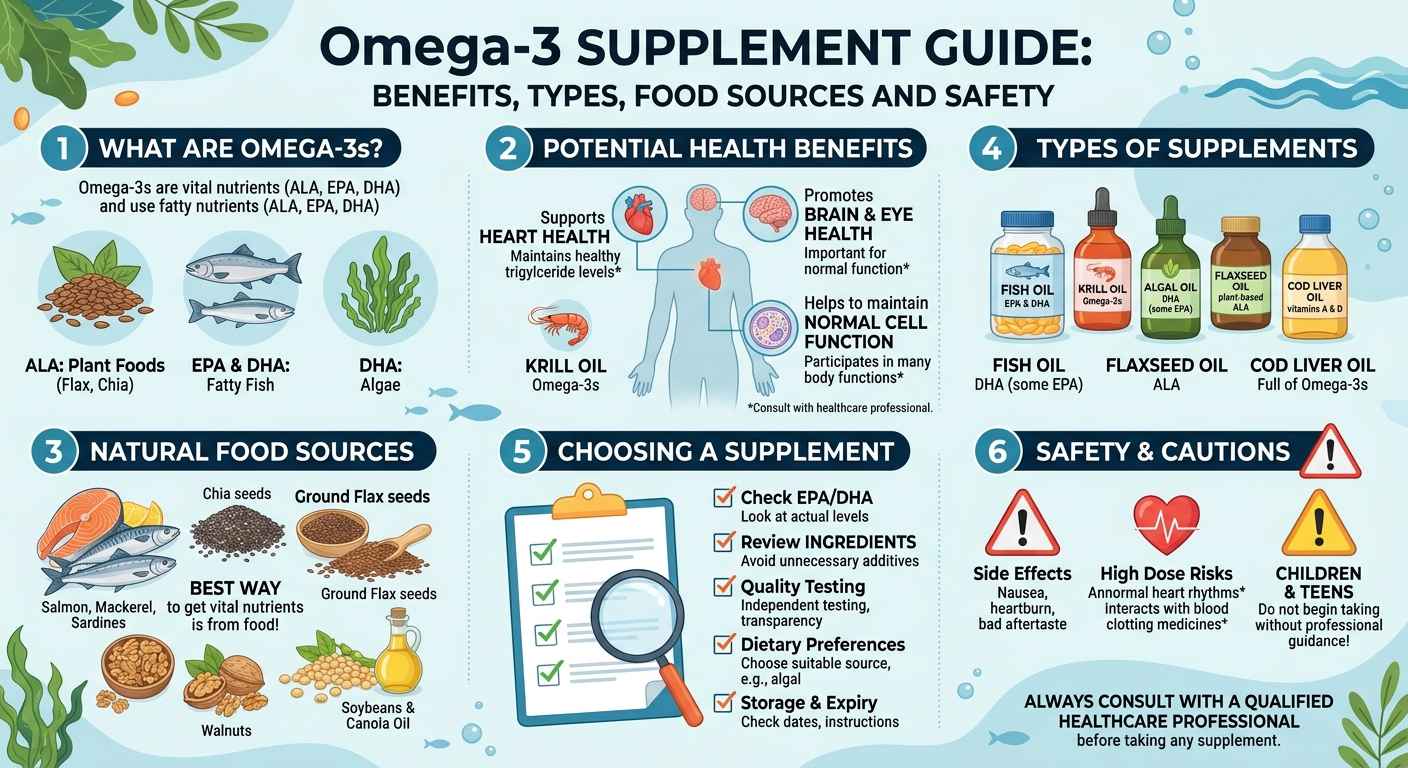
Omega-3 fatty acids are vital nutrients that are important to overall health. They are important for normal cell functioning and for the health of the heart, brain, eyes and immune system. Some omega-3s can’t be made in your body, so it’s important to get enough omega-3 from food. The Omega-3 Supplement Guide discusses the types of omega-3s, food sources, potential health benefits, and safety issues. It also helps readers know when supplements can be worth discussing with a health care professional.
What are Omega-3 Fatty Acids?

Omega-3 fatty acids are a class of polyunsaturated fats that the body requires to carry out several important functions. They are present in sea foods, seeds, nuts and some vegetable oils.
For more information, read our article on-Easy Healthy Winter Meals: 15 Delicious Ideas
There are three main types of omega-3 fats:
ALA (Alpha Linolenic Acid)
ALA is found mostly in plant foods like flaxseeds, chia seeds, walnuts and soybean oil. It’s an essential fatty acid, meaning the body has to get it from food.
EPA (Eicosaenoic Acid)
EPA is present primarily in fatty fish and shellfish. It is involved in normal cell functions and the body’s inflammatory response.
DHA (Docosahexaenoic Acid) –
DHA is a major component of cell membranes, especially in the brain and retina. Fatty fish and algae-based products are common sources.

Potential Health Benefits of Omega-3
Omega-3 fatty acids are involved in many important processes in the body. But eating foods rich in omega-3 fatty acids doesn’t always provide the same benefits as taking supplements.
Supports Heart Health
Omega-3 fatty acids have been connected to heart health. If you have high triglycerides, your doctor may prescribe prescription omega-3 medication to lower them. But a normal bottle of fish oil doesn’t offer any promise of preventing heart disease.
Promotes brain and eye health
DHA is an important structural component of the brain and retina . A diet rich in omega-3 fatty acids is good for normal brain and eye function.
Helps to maintain normal cell function
“Omega-3 fatty acids are components of cell membranes and participate in many normal body functions, such as activity of the immune system.
For more information, read our article on-How Much Saturated Fat Per Day? Daily Limits
Types of Omega-3 Supplements

Different omega-3 products have different fatty acids.
Fish Oil : Typically contains EPA and DHA from fish.
Krill Oil: Derived from small marine crustaceans, it contains omega-3 fatty acids.
Algal Oil: A source of DHA derived from plants. Some products may also contain EPA.
Flaxseed oil: A source of omega-3 fatty acid ALA from plants.
Cod Liver Oil: Full of omega-3s and vitamins A and D. Can be too much of a good thing if you don’t need it.
The choice of a product depends on the diet, needs and recommendations of a specialist.
Natural Sources of Omega-3 Food

Generally, the best way to get vital nutrients is from food. There are few common foods that contain omega 3 fatty acids.
Good sources are:
- Sardines, Salmon, Mackerel
- Flax seeds (ground) and Chia seeds
- Walnuts
- Soybeans and soybean oils
- or Canola Oil some algae-based foods
Eating a variety of these foods as part of a balanced eating pattern can help you meet your omega-3 needs.
For more information, read our article on-Protein-Packed Grains to Add to Your Diet
Choosing an Omega-3 Supplement
If a health professional recommends you take supplements, it is important to read the labels on the products.
Here’s a thought:
Check EPA/DHA: But look at the actual EPA and DHA levels, not just the total fish oil.
Ingredients Review: Look for unnecessary ingredients and ingredients that cause allergies.
Quality Information Check: Look for independent quality testing and transparent manufacturing information.
Consider dietary preferences: If fish products aren’t your idea of food, opt for algal oil instead.
Check expiry dates: Don’t take any supplement without checking storage instructions and expiry info.
Omega-3 Supplement Safety and Cautions
You don’t need to take supplements of omega-3. Nausea, heartburn, a bad aftertaste, and upset stomach are among the possible side effects.
High-dose supplements also can increase some health risks, including, in some people, abnormal heart rhythms. They also can interact with medicines that affect blood clotting.
Children and teens should not begin taking omega-3 supplements without the guidance of a qualified health care professional. People with allergies, pre-existing medical conditions or taking regular medication should seek professional advice prior to taking supplements.
For more information, read our article on-Cobalamin Deficiency Causes, Symptoms & Remedies
Frequently Asked Questions F A Qs
1.There are three main types of omega-3 fatty acids.
There are three main types. These are ALA, EPA & DHA. Plant foods are mostly ALA and seafood is mostly EPA and DHA .
Who Needs Omega-3 Supplements?
No, a varied and balanced diet provides plenty of omega-3s. The level of supplementation depends on the individual’s nutritional needs.
What foods are natural sources of omega-3?
You’ll find omega-3 fatty acids naturally in oily fish, chia seeds, flaxseeds, walnuts and some vegetable oils.
Is fish oil the same as omega-3 fatty acids?
No. Fish oil is high in omega-3 fatty acids, particularly EPA and DHA. Omega-3 is a larger family of essential fats that are found in many foods and supplements.
Are there side effects of omega-3 supplements?
Yup. Some patients may experience heartburn, nausea, an unpleasant taste or digestive upset. Please consult your physician prior to starting any supplementation program.
Final Thoughts
Omega-3 fatty acids are important nutrients that help to support normal body function, including heart, brain and eye health. One practical way to get these is to eat fish, seeds, nuts and other nutrient-rich foods as part of a well-rounded diet.
Why Food Comes First and Supplements Need to be Handled with Care This Omega-3 Supplement Guide explains: Always consult with a qualified health care professional before taking any supplement, especially children and teenagers.