
What Is Ideal Body Weight For Your Health
Ideal Body Weight and What It Means for Your Health
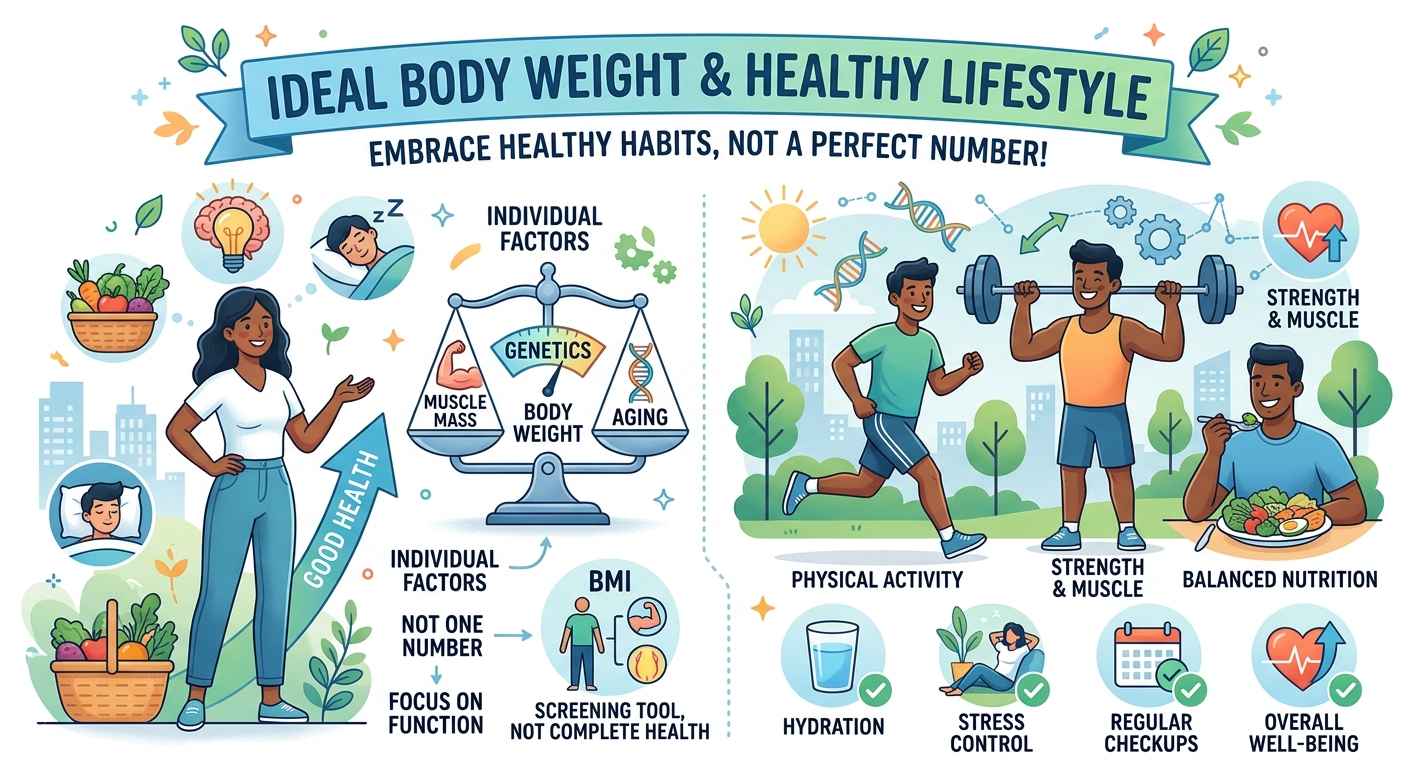
Have you ever asked yourself what ideal body weight actually is? Many people look for the ideal weight given their height, age or looks. But there is no single body weight that is ideal for everyone. There are many factors that influence a person’s health including genetics, age, body composition, nutrition, physical activity and lifestyle.
Ideal body weight is not how you look. It’s about learning how different things affect health, and promoting healthy behaviours that help the body function well.
What is a Healthy Weight?

Ideal body weight usually means a range of weights that may be associated with good health for a person’s situation. But it’s not a set number, that’s the same for everyone.
People who are the same height can have different body weights based on things like muscle mass, bone structure, genetics and body composition.
It is more useful to look at overall health, energy, nutrition, physical fitness, and medical history, rather than just the number on a scale.
Factors Influencing Healthy Body Weight

There are many things that can affect a person’s body weight. To know them is to know why there is no universal ideal body weight.
Age and Maturity
Age is an important factor in the growth and composition of the body. Children and teens experience normal growth and physical changes. Adults also experience changes in muscle mass, metabolism and body composition over time.
Build and Height
One of the factors to be considered in assessing body weight is height. But people of the same height can naturally have different body structures and weights.
3.Genetics
Genetics can influence body composition, metabolism, and how the body stores energy. Family history may also contribute to differences in body weight.
Body composition and muscle mass
The total body weight is muscle, bone and other tissues. Someone with more muscle mass might weigh more, but not necessarily have the same body composition as someone with less muscle.
Everyday life and lifestyle
Wellness is sleep, exercise, healthy eating, stress management, daily routines.
What Is BMI And How Is It Related To Body Weight?

The Body Mass Index (BMI) is a screening measure that relates weight to height. It is sometimes used as one tool by healthcare professionals to assess potential health risks associated with weight .
BMI, however, does not measure body fat directly and makes no distinction between muscle and fat. So, it shouldn’t be taken as a complete measure of someone’s health.
For adults, BMI can be used in conjunction with medical history, physical exam and other health information.
Important: Kids and teens need a different evaluation as their bodies are still growing. Healthcare providers interpret BMI using age- and gender-specific growth charts rather than adult BMI categories.
For more information, read our article on-How Many Calories Should I Eat Per Day? The Complete Guide
Healthy Practices For Overall Wellness

It’s better to create sustainable health habits than to try to hit a number that you think is ideal.
Below are some daily habits that help you stay healthy overall:
Eat well-balanced meals: Add healthy foods like vegetables, fruits, whole grains, protein foods and other healthy foods to.
Stay physically active: Pick recreational activities that are fun such as walking, biking, dancing or playing a sport.
Sleep enough Sleep well: Try to have a regular sleeping routine to help your body and mind stay healthy.
Keep hydrated: Drink plenty of water throughout the day.
Control stress: Relaxation, hobbies and supportive people can help to control everyday stress.
Have regular health checkups: Healthcare providers can help assess the individual health needs.
It’s more important to have healthy habits than to compare your body to another body.
For more information, read our article on-Healthy and Delicious for high fiber snack
When to get professional help?
If you have concerns about your weight, growth, nutrition or general health, you might like to consult a qualified healthcare professional.
Before giving advice a healthcare professional can take into account your age, medical history, growth patterns, lifestyle and other relevant factors.
Do not use online weight charts or calculators in place of individual medical advice.
Ideal Body Weight FAQs
Ideal weight?
Ideal body weight is a nebulous term that describes a weight that may be suitable for a person’s health. There’s a number of personal and biological factors involved.”
Is height the factor determining ideal body weight?
One of the criteria of body weight assessment is height. But genetics, age, muscle mass, body composition and overall health are important, too.
BMI Body Mass Index
BMI is an acronym that stands for Body Mass Index. It’s a screening tool that compares weight to height to help evaluate the potential health risks associated with weight.
Is BMI for teenagers different from BMI for adults?
No. BMI is interpreted differently for adults than it is for teenagers. Healthcare providers use growth charts that are age- and sex-specific for children and teens.
Is there a perfect weight for everyone?
No. Everyone’s body is different. There is no single weight that is best for good health.
Closing Comments
To know ideal body weight you must realise that health is more than numbers. Individual differences depend on age, genetics, height, muscle mass, lifestyle and medical history.
Don’t think about a number, think about balanced nutrition, fun physical activity, enough sleep and regular health care. These habits can be good for your overall health and well-being in the long run.




2 thoughts on “What Is Ideal Body Weight For Your Health”
Comments are closed.