
Best group exercises at home : Top 10 Fun Exercises
10 Best Group Exercises at Home Fun Workouts to Do Together
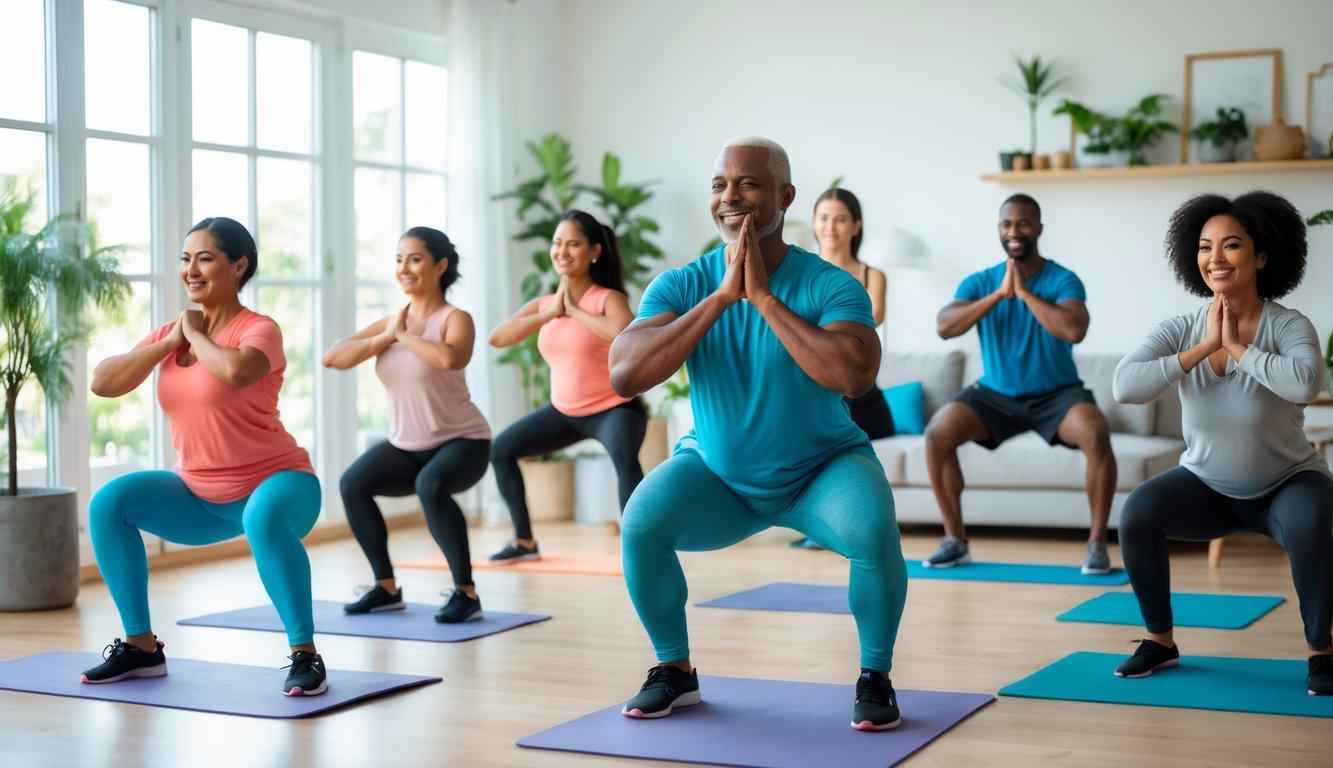
The best group exercises at home bring together foundational moves, varied fitness levels, and activities that keep everyone involved. The workouts include things like body-weight circuits and dance classes, and they can help you get stronger, improve your balance and coordination, and boost your cardiovascular fitness.
Here are some things you can do to spice up your home fitness routine, whether you are new to exercise or already active.
Advantages of Best Group Exercise at Home
There are many benefits to working out together beyond the physical exercise. This can help get everyone into a good routine and make exercise less like a chore.
Boosts motivation and consistency
Work out with others to help keep you motivated. Friends and family can motivate one another, celebrate each other’s progress, and make fitness a weekly habit.
Minimal equipment required
Body weight moves like squats, marching and modified pushups are part of many group fitness classes. Start with a clear floor, some comfy clothes and a bottle of water.
Promotes Social Connection
Together. Quality time. Group Practice. An afternoon or weekend is more fun with a workout buddy.
10 Best Group Exercises To Do At Home.
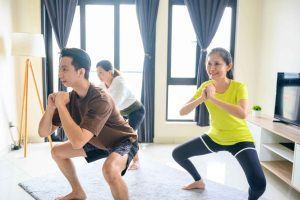
You have ten real-world activities that you can adapt to your level of fitness and the space you have.
For more information, read our article on Deep Breaths Exercises
Body weight circuit
Body weight circuit training is a series of exercises done consecutively for one efficient workout. At each station, all participants do each movement before moving to the next station.
Here’s a simple circuit to try out.
- 10 Air Squats
- 10 Wall push-ups
- “Stand in place for twenty seconds.
- 10 knee to chest lifts (each side)
- rest 30 sec
Do 1 or 2 rounds depending on your fitness level. Let people work at their own pace and take extra breaks when they need it.
How it works: Circuit training keeps them busy working different patterns of movement in a group setting. No gym equipment required.
Group Dance Workout

group-dance-workout-at-home
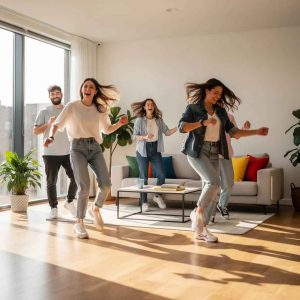
If you like music and moving, dance workouts can be a fun alternative. Make a fun playlist and some easy steps that everyone can comfortably follow.
Others may follow along. One person can lead a short sequence. Or you could take turns picking the songs, or making up easy dances.
Beginner tip – Keep the moves simple, and don’t do any fancy jumps until everybody is comfortable with the moves.
For more information, read our article on Best Upper Back Stretches For Relief & Flexibility
The Squatting Challenge
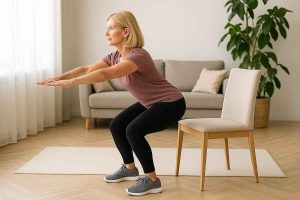
Squats work the muscles of your thighs and hips. They are also easy to incorporate into a group exercise session as participants can adapt the movement to their own ability.
Place your feet shoulder width apart Bend your knees and hips and lower yourself down as far as is comfortable and then stand back up.
Do 2 sets of 8-10 reps with rest in between sets. If you like to practice sitting and standing, you can have a goal to do it with a chair.
Focus on good technique, not trying to out-repetition your competition.
Partner Coordination and Marching Exercise
Well-organized coordinated activities can make group exercise more interactive. Face partner and march in place together. Gentle arm swings or alternate knee raises.
You can make it harder by having one person lead a movement and the other follow. Wait a minute and switch roles.
These drills are good for small spaces, and can be modified for beginners.
Wall push-ups

squats-and-wall-pushups-beginners
Wall push-ups are an upper body push exercise that participants can do without having to get down on the floor.
Stand with your hands slightly wider than shoulder width apart, facing a wall. Bend your elbows and bring your chest to the wall, then push back to the start.
8-12 good reps or whatever feels right. Do
Wall push-ups are particularly helpful if the members of the group have different amounts of upper body strength.
For more information, read our article on Calisthenics Exercises For A Basic Full Body Workout
Low Impact Cardio Interval

low-impact-cardio-group-workout
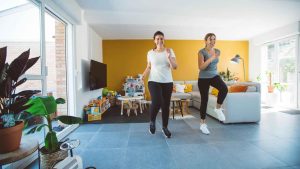
Low-impact cardio gets your heart pumping without any jumps. They are convenient for apartments or homes where space or noise might be a problem.
Select 3 moves:
- Marching on the spot.
- Sidestepping
- Heel taps switch.
Do each for 30 seconds, with a short rest in between. If everyone’s happy, run through the sequence another time or two.
People should be able to slow down or stop if they’re not well.
Beginner Yoga and Stretching
beginner-group-yoga-stretching
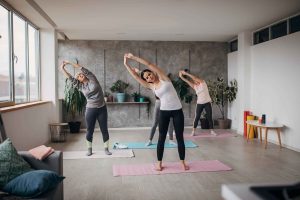
Gentle stretches and yoga-inspired movements teach balance, flexibility and controlled breathing.
Try simple moves like shoulder rolls, easy side bends when standing and light calf stretches. Each stretch steady and no bouncing and do not force any position.
The group leader may be leading the session, but can also gently remind everyone to move within a comfortable range.
Best for: Groups who are looking for a relaxing activity, or a light session after a more strenuous workout.
Touch and Side-Step Patterns
Step touches are easy to learn and can be very useful as a warm-up or in their own right as a low-impact activity.
shoulder width apart. Step one side, bring the other foot to meet it. Repeat in opposite direction. When your coordination evolves, incorporate light arm movements.
Together maybe one or two minutes, and rest. Ensure there is enough room between participants so they don’t bump into each other.
For more information, read our article on Workout Burns More Calories Than Running
Core Stability Exercises
core-stability-exercises-at-home
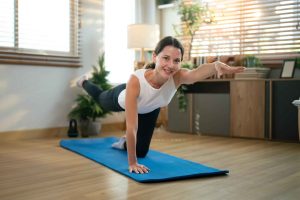
Core exercises strengthen the muscles in your pelvis, abdomen, lower back, and hips. These muscles support your trunk and help you move. Select beginner movements that can be executed with control.
Options are:
- Knee Raises – Standing
- Opposite to elbow-to-knee Standing
- Bird dog exercises on a comfortable mat
To do bird-dog exercises, start on your hands and knees. Then, if you are comfortable, extend one arm and the opposite leg. Return to the starting position and change sides.
Do a few controlled repetitions on each side. If you experience any discomfort, opt for a different exercise.
For more information, read our article on Core Exercises for Every Fitness Level, A Beginner to Expert Guide
Relay Race for Group Fitness
A fitness relay introduces variety without making the workout too competitive. Have students work in small groups, or have each student take a turn doing a brief activity.
For example, one person marches in place for 20 seconds before the next person gets a turn. Other stations could be side steps, wall push ups or easy sit-to-stands.
Focus on participation and encouragement, not speed or physical ability.
How to Host a Safe best Group exercises at Home
A little preparation helps everyone to be comfortable.
Begin with a Warm-Up
Take five minutes to walk gently, rolling the shoulders and moving the arms through a comfortable range. Start slow and then pick up speed.
Select Exercises for Various Fitness Levels
Offer easier and more difficult variations. Participants may substitute wall push-ups for floor push-ups or use chair-supported movements as needed.
Not everyone has to do every exercise in the same way.
Give Plenty of Space
Clear furniture from the gym area and ensure the floor is dry and solid. Maintain distance between participants especially when moving sideways and doing dance movements.
Add Water and Rest Breaks
Short breaks let everybody recover. Drink water as needed, and do not push through pain, dizziness, chest discomfort, or unusual shortness of breath. If you develop any concerning symptoms, stop exercising and seek appropriate medical attention.
Example 20-Minute Group Exercise
This simple plan is a good starting point. Movements and time are adapted to the group’s abilities.
Minutes 1-5: Easy marching and warm-up moves
6-10 Minutes : Wall push-ups and squats
11–15 Minutes : Dance or low-impact cardio
Minutes 16-18: Easy core stability work
19-20 Minutes: Slow walk and comfortable stretch
Beginners can shorten the active time and lengthen the breaks. The goal is to put together a fun routine, not to perfect every movement.
Frequently Asked Questions (FAQ)
What is the best length for a group class?
A beginner session may be 10-20 minutes including warm up and cool down time. You can gradually increase the duration as per the comfort, fitness and recovery.
How many people can work out together at home?
The number depends on the space available and the activities selected. You can do partner drills with just two people, but larger groups might want to rotate partners or use separate exercise stations.
How do you make home group workouts enjoyable?
Rotate the session leader, choose music that everyone likes, change up the activities, and celebrate all the participants. Don’t make the session a race or a contest of repetitions.
Conclusion
The best group exercises at home are simple, adaptable and fun for all involved. There are lots of ways to stay active without expensive equipment: body weight circuits, dance workouts, low-impact cardio, gentle yoga and coordination drills.
Start with a short session, let each person go at their own pace, and build a routine that fits your schedule. Working out together, with regularity and mutual cheerleading, can easily become a rewarding part of life.


One thought on “Best group exercises at home : Top 10 Fun Exercises”
Comments are closed.