
Foods That Boost Brain Health: 12 Best Foods for a Healthy Brain
Foods That Boost Brain Health | Foods to Improve Brain Health
Your brain is in charge of everything you do, from remembering information to making decisions, learning new skills, and running your daily activities. Your brain, like the rest of your body, needs good nutrition to function well.
A well-rounded diet with the right vitamins, minerals, healthy fats and antioxidants can support overall brain health. Some foods contain nutrients that protect the brain cells and provide normal brain functioning.
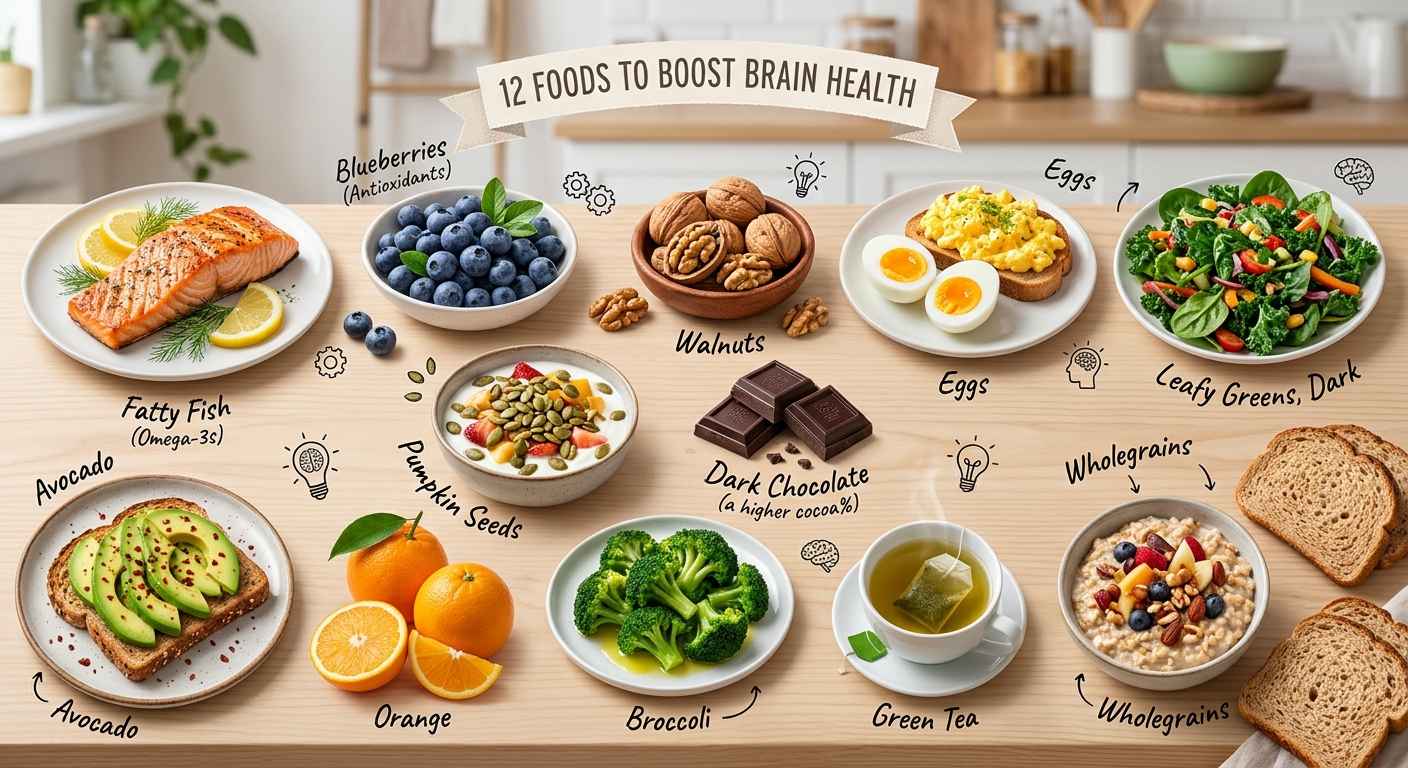
In this guide we review 12 Foods That Boost Brain Health easy to add to your daily diet.
Fatty fish
Fatty fish such as salmon, sardines, trout and mackerel are rich in omega-3 fatty acids. These good fats are important parts of membranes of brain cells.
Omega 3 fatty acids and especially DHA are important for the proper functioning of the brain. Eating fish as part of a healthy diet may provide nutrients that help protect brain function throughout life.
How to enjoy: Incorporate grilled salmon, baked fish or sardines into your regular meals.
For more information, read our article on-MyPlate Guide-Construct a Healthy Balanced
Blue berry
Blueberries are packed with antioxidants called anthocyanins which give them their natural blue colour. These compounds play a role in cellular protection against oxidative stress.
Research has suggested that eating berries may be beneficial for memory and cognitive health, but more research is needed.
How to enjoy blueberries Add fresh or frozen blueberries to muesli, smoothies or yoghurt.
Walnuts
Walnuts are one of the very best nuts to include in a brain healthy diet. They supply plant-based omega-3 fatty acids, vitamin E, and helpful antioxidants.
These nutrients help protect cells from oxidative damage and support overall health.
How to enjoy Enjoy as a snack or add chopped walnuts to breakfast bowls and salads.
Eggs.
Eggs are a good source of several nutrients important to brain function, including choline, vitamin B12 and protein.
Choline is particularly important since the body uses it to make acetylcholine, a chemical messenger involved in memory and learning.
How to enjoy: Boiled eggs, scrambled eggs or omelettes can be part of balanced meals.
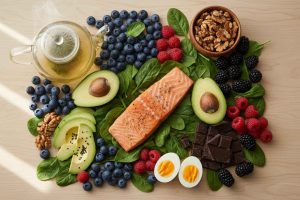
Leafy Greens, Dark
Spinach, kale and other leafy greens are loaded with folate, vitamin K, lutein and other good stuff.
These vegetables are linked to healthy ageing as part of an overall healthy eating pattern.
How to enjoy: Add to soups, vegetable dishes, salads or smoothies.
Pumpkin seed oil
Pumpkin seeds are loaded with magnesium, zinc, iron and antioxidants. These nutrients help support the function of a healthy nervous system, and overall health.
Zinc and magnesium are especially important for various processes in the brain and nerves.
How to eat: Sprinkle the pumpkin seeds onto salads, muesli or yoghurt.
For more information, read our article on-Foods That Contain More Magnesium Than Pumpkin Seeds
Dark Chocolate
Dark chocolate has loads of flavonoids, which are natural plant compounds that are antioxidants. It also has trace minerals such as magnesium and iron.
Dark chocolate has a higher percentage of cocoa and while it might have some added sugar and calories, it is best eaten in moderation.
How to enjoy: Indulge in a small piece of dark chocolate from time to time.

Avocado
Avocados are packed with monounsaturated fats, vitamin E and folate. Healthy fats are important components of a well-rounded diet and help to maintain normal body functioning.
They also contain potassium and fibre, which makes them a nutritious addition to everyday meals.
Enjoy it on top of whole grain toast, in salads or sandwiches.
Orange

blueberries-fruits-for-brain-health

Oranges are famous for their vitamin C. Vitamin C helps to protect cells from oxidative stress by acting as an antioxidant.
It also helps keep the nervous system functioning normally.
How to enjoy: Have a fresh orange or add other vitamin C rich fruits to your daily diet.
Broccoli
leafy-greens-broccoli-brain-health

Broccoli provides vitamin K, vitamin C, folate and helpful plant compounds. These nutrients help with normal cellular functions and general well being.
A simple way to diversify your diet is to add different vegetables into your dishes.
How to enjoy: Steam or add to soups, stir fries and vegetable dishes.
Green tea
Green tea is full of polyphenols and a natural compound known as L-theanine. It also has a moderate amount of caffeine.
Research has indicated that caffeine along with L-theanine may be helpful for attention and alertness. But people can react differently.
How to enjoy: Add unsweetened green tea to your daily balanced routine.
For more information, read our article on-Benefits of Green Tea and the Right Time to Drink It
Wholegrains
Oats, brown rice, quinoa and whole-wheat bread are sources of complex carbohydrates, fibre and B vitamins.
The brain’s main fuel is carbohydrate. Whole grain meals can provide a steady source of energy.
How to eat: Have muesli for breakfast, brown rice for lunch or whole-grain bread for sandwiches.
Easy Ways To Keep Your Brain Healthy

To help support brain health, consider adding these daily habits to your diet brain-boosting foods:
- Eat a variety of fruits and veggies.
- Eat balanced meals with healthy fat and protein.
- Make sure to drink lots of water throughout the day.
- Sleep plenty.
- Get busy.
- Read, do puzzles and learn new skills to train your brain.
It includes good nutrition, regular physical activity, adequate sleep and social engagement.
For more information, read our article on-Brain Games for Seniors To Keep Your Brain Active
FAQ (Frequently Asked Questions)
What is the Foods That Boost Brain Health?
Fatty fish, blueberries, walnuts, eggs, leafy green vegetables, pumpkin seeds, and whole grains are nutritious choices that provide key brain-supporting nutrients.
The best fruit for brain?
Colourful fruits such as blueberries, oranges and strawberries are full of antioxidants and vitamins to help you stay healthy.
Do walnuts help your memory?
Walnuts are packed with plant-based omega-3 fatty acids, vitamin E and antioxidants. These nutrients support overall brain health, but eating walnuts alone won’t guarantee better memory.
Why is breakfast important for the brain?
The energy and nutrients needed to get through the day are provided by a well-rounded breakfast. You can improve the nutritional value of breakfast by adding in whole grains, fruit, eggs or yoghurt.
What are some natural ways to improve my brain health?
Follow a healthy diet, take regular physical activity, get enough sleep, keep in touch with people and do things that make you think .
For more information, read our article on-
Abstract
Eating healthy foods is an important aspect of promoting overall brain health. Fatty fish, blueberries, walnuts, eggs, leafy greens and whole grains provide us with useful nutrients to keep our brains functioning as they should.
The best way is to eat a varied and balanced diet – not just one food. Mix healthy eating with good sleep, regular physical activity and positive daily habits to support your overall well-being.




One thought on “Foods That Boost Brain Health: 12 Best Foods for a Healthy Brain”
Comments are closed.