
5 Common Cold Weather Myths: Facts You Should Know
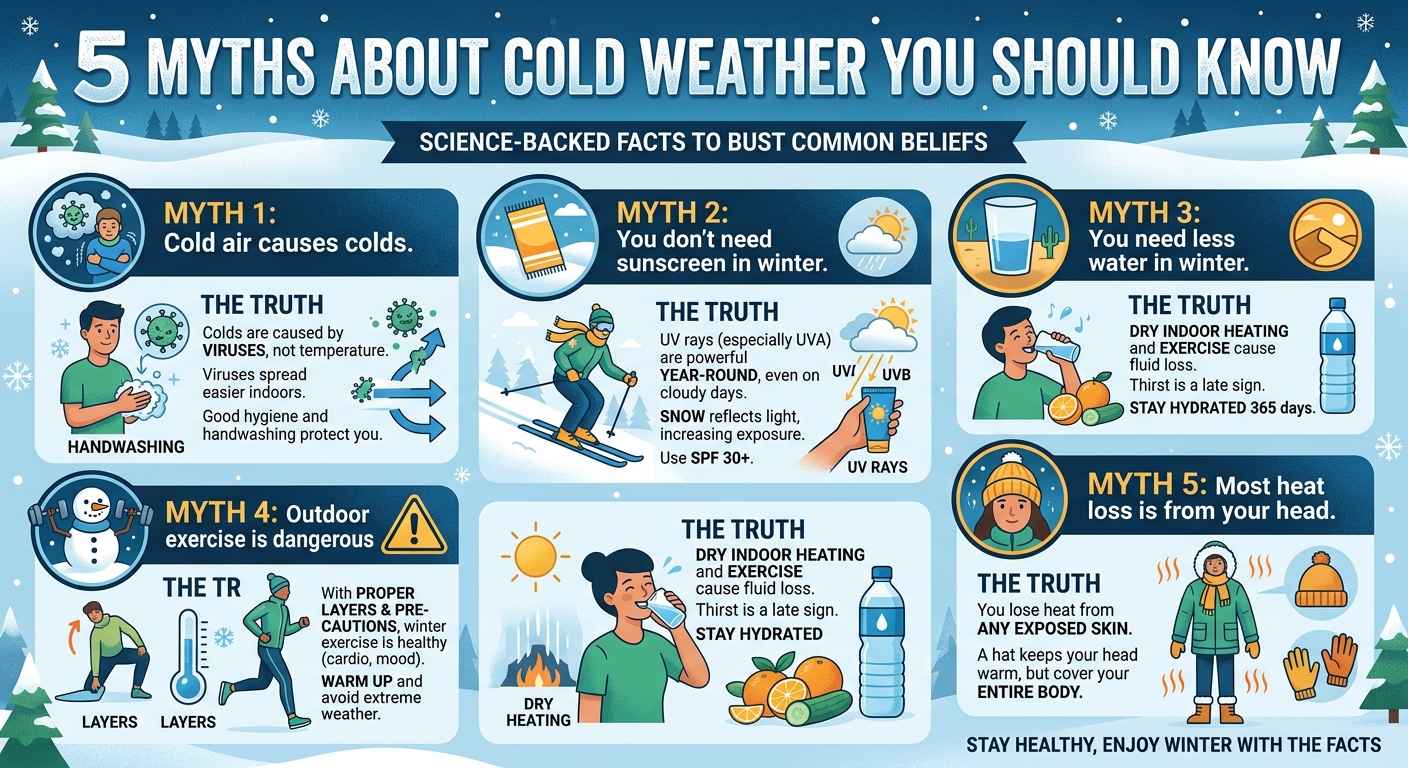
5 Myths About Cold Weather You Should Know
There are a lot of 5 Common Cold Weather Myths . There are many myths out there like cold weather makes you sick, if you go outside without a coat on you will catch a cold or you can drink less water in the winter months. But some of the popular beliefs are not exactly correct.
Facts can help you make better choices about your health and your daily routine. In this article we will take a look at five common myths about cold weather and tell you what science says about them.
Cold weather directly causes the common cold.

cold-weather-common-cold-myth.webp

One of the most popular myths about cold weather is that the common cold is caused by cold temperatures. The common cold is caused by viruses, not by cold air.
The cold and flu viruses are more easily spread in the colder months of the year, when people are indoors and in close contact with other people. Some viruses also like it cold and dry.
The truth: Viruses don’t just like cold weather. Washing your hands often, practising good hygiene, and staying away from people who are sick can help reduce your risk of getting sick.
For more information, read our article on-Exercise Workout Fitness A Beginner’s Guide to Fitness
You Don’t Need Sunscreen In The Winter

winter-sunscreen-skin-protection

People think you only need sunscreen in the summer. Another popular winter health myth.
Ultraviolet (UV) rays are so powerful they can reach your skin any time of year. UVA rays can cause skin ageing and skin damage even on cloudy or cold days. In some places, snow can reflect sunlight, which can increase your exposure to UV.
Winter Skin Care Tips
- When you go outside, use a broad-spectrum sunscreen with an SPF of 30 or higher.
- Use sunscreen on all exposed skin.
- Apply again as instructed on product label.
- If you are going to be outdoors for a long time wear protective clothing.
The truth: Sunscreen is still an important part of your daily skin protection, even in the winter.
Drink Less Water When It’s Cold

5 Common Cold Weather Myths Facts You Should Know

In winter people don’t feel as thirsty and so they think they need less water. But you still need to stay hydrated in cold weather.
Indoor heating (when dry) , exercising and breathing cold , dry air can cause fluid loss . You can also become dehydrated without the strong thirst that people feel in hot weather.
How to stay hydrated in winter 5 easy ways
- Drink water throughout the day.
- Eat foods high in water such as oranges, cucumbers and soups.
- Drink plenty of water before and after exercising.
- Watch out for signs such as thirst and dark coloured urine.
- You have to keep hydrated 365 days a year.
The truth: Don’t forget to drink water even if the weather is chilly.
For more information, read our article on-Lemon Ginger Apple Cider Vinegar Drink: Benefits & Safety
Outdoor exercise in winter is dangerous anyway
Cold_Weather, Winter_Health, Winter_Myths, Winter_Wellness, Healthy_Living

There are people who will not exercise outside in the winter because they believe exercising in cold weather is dangerous.
But when the conditions are right, outdoor exercise can be a healthy part of your winter routine. Walking and cycling at a moderate pace, for example, are great for your cardiovascular health, mood and general fitness.
Winter Exercise Tips for Safe Workouts
- Dress in comfortable layers.
- Before you begin exercising, warm up.
- Walk in safe zones.
- Do not exercise outdoors in extreme weather.
- Drink plenty of water before and after your workout.
Fact: Exercising in cold weather isn’t dangerous. But people should take into account temperature, weather conditions and their own health needs.
For more information, read our article on-10 Healthy Ways to Building a Strong and Healthy Body
The majority of your body heat is lost from your head
One of the oldest myths about cold weather. It is commonly believed that most of the body’s heat is lost through the head.
In reality, how much heat you lose depends on how much of your body is exposed to cold temperatures. The head does not lose heat any faster than any other exposed part of your body.
A hat can still do a good job of keeping you comfortable, especially in very cold weather. But it’s just as important to cover your entire body with the right clothing.
The truth: Your body loses heat through any open surface. Dress in warm winter clothing to keep yourself comfortable and warm.
For more information, read our article on-Omega-3 Supplements Guide: Benefits, Types and Safety
Why Knowing Cold Weather Myths Is Important
Misinformation about winter health can lead to bad daily habits. For instance, not wearing sunscreen, not drinking enough water, or not doing anything can affect your overall well-being.
Don’t be fooled by common myths and pay attention to practical habits such as drinking enough water, practicing good hygiene, protecting your skin and choosing the right physical activities.
You can also read our related guides on Healthy Living, Winter Health Tips and Daily Exercise for more wellness info.
FAQ (Frequently Asked Questions)
Does cold weather really give you a cold?
No. Colds are caused by viruses. Cold can affect transmission of these viruses, but cold temperatures alone do not cause transmission.
Do I need sunscreen in the winter?
Yes. UV rays can damage your skin any time of year. Wear broad-spectrum SPF 30 or higher sunscreen when you are outdoors.
Is less water necessary in the winter?
Not if. The body needs fluid year-round, even if you don’t feel too thirsty.
Can walking in the cold outdoors be good for you?
Getting outside and walking can be good for your health as long as the weather is safe and you’re properly dressed.
Does a hat hold all the heat of the body?
No. 100. A hat will keep your head warm but any exposed part of your body will lose heat.
Summary
These five common cold weather myths should have you wanting to separate popular beliefs from reliable health information. Cold weather does not cause colds, you still need sunscreen in the winter and staying hydrated is important.
Knowing the facts and practicing healthy habits during the winter months can help you enjoy the colder months and can help support your overall health and well-being.




2 thoughts on “5 Common Cold Weather Myths: Facts You Should Know”
Comments are closed.