10 Simple Home Workout Moves That Require No Equipment
Introduction,
You don’t need a gym membership, pricey equipment or a complicated workout plan to be active. An equipment free home workout allows you to workout with the weight of your own body and a little bit of open space. Whether you’re a beginner or just want an easy fitness routine, simple exercises at home will help you develop strength, improve balance, and support cardiovascular health.
With body weight exercises it’s your own body that’s the resistance. You can work different muscle groups without the use of dumbbells or machines by performing squats, push-ups, lunges and planks. Many exercises can be modified to your current fitness level.
This guide includes 10 simple exercises, explains how to combine them into a simple routine and gives some useful tips for exercising safely at home.
Advantages of a No-Equipment Home Workout
There are many benefits of a home workout for busy people.
Simple and Inexpensive
You can work out in your living room, bedroom or any open space you have. You don’t need a gym or any fancy fitness equipment. This makes at home workouts a real possibility in building a regular physical activity habit.
Improves Strength & Flexibility
Body weight exercises work out different muscle groups and improve your everyday mobility. Squats and lunges build strength in the lower body and modified push-ups build strength in the chest, shoulders and arms.
Personalizable
If you are a beginner, try the easier variations and work your way up as you become more comfortable. You can also cut your routine short on busy days, and make it harder when appropriate.
For more information, read our article on-Best group exercises at home
10 Best Home Workout Exercises With No Equipment
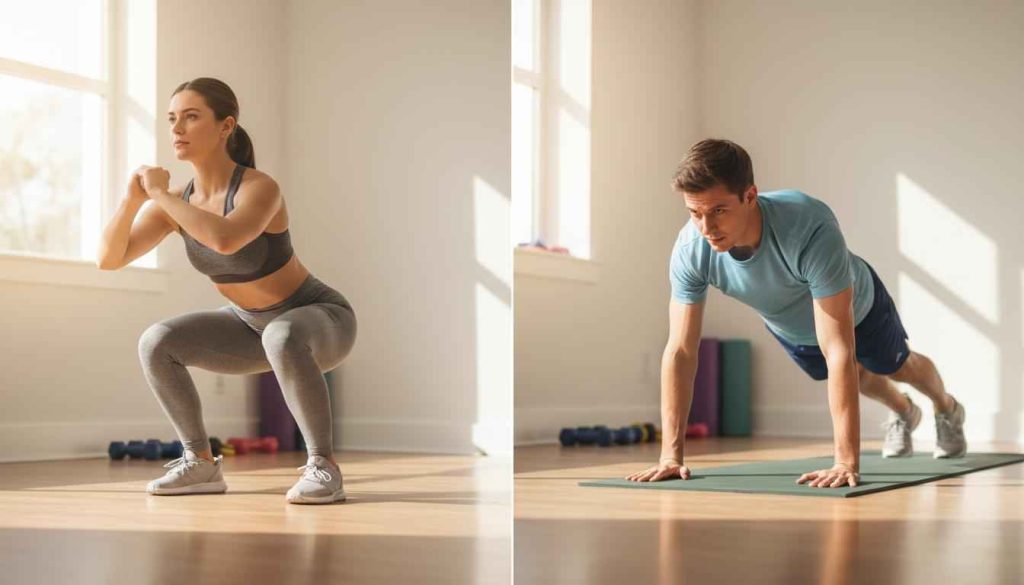
The following exercises do not require any equipment. Select variations that feel good and enable you to keep good technique.
Body Weight Squats
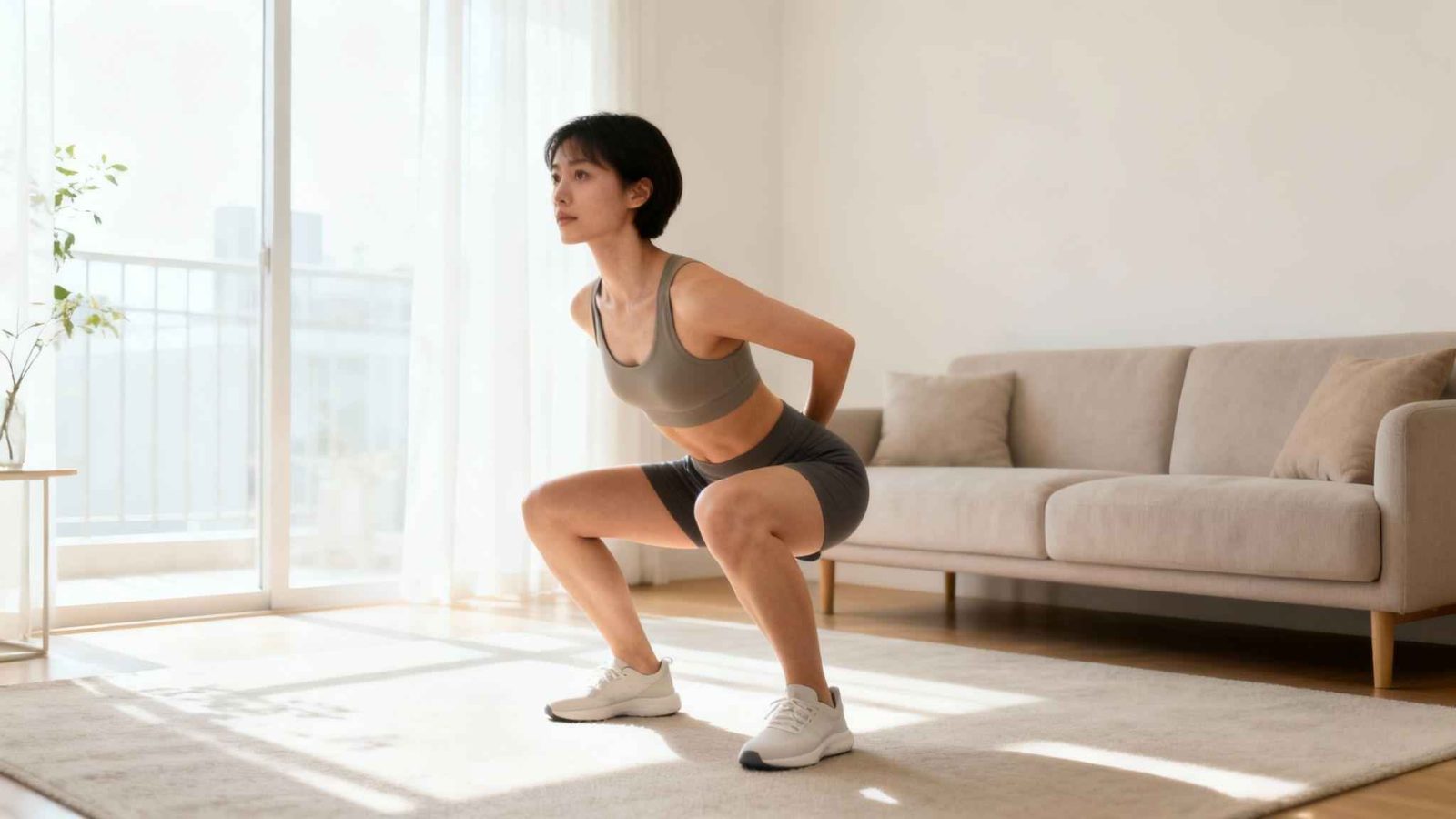
Squats work the thigh, hip and buttock muscles. They also help build strength for everyday tasks such as rising from a chair.
Getting it done:
- Stand with your feet apart at shoulder-width.
- Bend your knees and push your hips back as if you were sitting down on a chair.
- Lift the chest and keep the feet flat on the floor.
- Back to the surface.
Beginner goal: 8-12 reps.
Wall Push Ups
Wall push-ups are a good alternative to doing push-ups on the floor, especially for beginners. They do chest, shoulders and arms.
How to do that:
- Stand facing a wall. Put your palms on the wall at shoulder height.
- Pull back a little, keeping the body in line.
- Bend your elbows, bringing your chest toward the wall.
- Push back a bit to starting position.
Beginners : aim for 8-12 reps.
For more information, read our article on-Deep Breaths Exercises
Lunge backward
Reverse lunges will strengthen the legs and glutes as well as develop balance and co-ordination.
How to do it
- Stand with feet apart at hips width.
- Take a step back.
- Maintain your balance and bend both knees as far as you can comfortably.
- Back to the start and change legs.
Beginners should aim for 6 to 10 repetitions per leg.
Activate your glutes
Glute bridges work your gluteal muscles and help to build strength in the hips.
How to:
- Lie on your back with your knees bent and feet flat on the floor.
- Let your arms fall to your sides.
- Gently squeeze your glutes and lift up your hips.
- Slowly drop your hips down.
Beginners 10-15 rep.
Plank on the forearm
Plank This works on your core muscles which support your trunk.
What to do.
- Place your forearms on the floor, with your elbows directly beneath your shoulders.
- Now bring your legs over your head.
- Keep your body comfortable and straight.
- Just keep your hips from sagging, and breathe normally.
Goal for beginner: 10-20 seconds hold. You can also do a modified plank by getting on your knees.
For more information, read our article on-Protein Breakfast Foods to Kickstart Your Day Right
Bird-Doggers
Bird Dogs build the core stability, balance and co-ordination.
How to do it: …
- Get down on your hands and knees.
- Stretch your right arm and left leg, keeping your torso from twisting.
- Return to the starting position.
- Repeat with your left arm and right leg.
Beginner: 6-10 repetitions on each side.
Standing Calf Raises
Calf Raises This exercise is good for strengthening the calf muscles and supporting ankle motion.
Here’s how:
- Feet shoulder width.
- Lift your heels slowly off the floor.
- Wait at the top for a second.
- Heel yourself.
Beginner target: 10-15 reps.
Marching in Place
Walking in Place Easy way to add movement and warm up your body. And it also gives some cardio.
How to do this
- Stand with your feet apart, a comfortable distance apart.
- Bring one knee up, then the next.
- Let your arms hang down at your sides.
- Keep moving at a pace where you can breathe easy.
Beginner Goal: 30-60 seconds
Stand Up Side Leg Raises
Side leg lifts work the muscles around your hips and also challenge your balance.
How to do
- it Stand upright and, if needed, lightly rest your hand against a wall for balance.
- Move one leg to the side without leaning your upper body.
- Gradually come back to the starting position.
- Do the repetitions on each side.
Beginner goal: 8-12 reps per leg.
Dead Bugs.
Dead bugs are a fundamental movement that teaches you coordination and trunk stability in a controlled way.
How To Do:
- Lie on your back, and extend your arms up to the ceiling.
- Lift your legs and bend your knees.
- Slowly stretch out one arm, and the opposite leg, with your back well supported.
- switch sides. Back to the start.
Beginner goal: 6-10 reps per side.
Creating a Basic Home Workout Routine
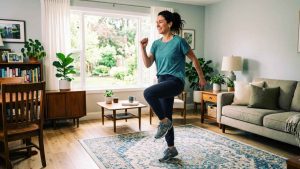
You don’t have to do all 10 exercises at once. Begin with something manageable and increase the difficulty gradually.
- Beginner 15-20 Minute Workout Routine
- March in place – 2 minutes
- Body weight squats – 8-12 reps.
- Wall Push-ups – 8 to 12 times
- Glute bridges – 10-15 reps.
- Bird Dogs 6 to 10 repetitions each side
- Calf raises standing – 10-15 reps
- Forearm plank 10-20 seconds
Rest between exercises as needed ~ 30-60 seconds. Do one or two rounds depending on your comfort & fitness. Finish with a few minutes of light stretching and movement.
For more ideas see our beginner’s home workout guide and core exercises for all levels of fitness.
For more information, read our article on-Best Upper Back Stretches For Relief & Flexibility
Tips to Get Better Results from Your Home Workouts
Start Slowly and Be Consistent
If you are new to exercising, start with a few exercises and shorter workout times. You’ll be more likely to stick with regular, manageable workouts than ones that leave you exhausted.
Concentrate on good technique
Control each movement by performing it slowly. If balance or technique is an issue, reduce the range of motion or choose a simpler modification.
Get Warm Before You Work Out
March in place, move your arms and gently mobilize your hips and shoulders for about five minutes. A warm-up prepares your body for activity.
Allow Yourself Time to Heal
Give yourself time to recover between difficult sessions. Fitness All help in fitness Adequate sleep, regular eating, plenty of fluids and rest.
Make Your Routine Fun
Choose activities you enjoy and schedule them at a time that works for you. You can combine strength exercises with gentle dancing, walking in place, or mobility activities so your routine doesn’t get boring.
Tips for Home Exercise Safety
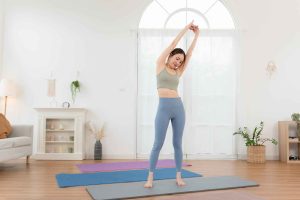
Dress comfortably. Find a clear surface, that isn’t slippery. Leave enough space around you to move freely. Use a wall for support when necessary and don’t rush through repetitions.
Stop exercising if you have sharp pain, dizziness, chest discomfort, or unusual shortness of breath. If symptoms are concerning or long-lasting, seek appropriate medical help. If you have a health condition or injury that may affect your exercise, talk to a qualified health care professional about any modifications you may need to make.
Progress is unique to each individual. Focus on your own movement, consistency and comfort and not on how others are doing.
Common questions asked
Can I do a home workout every day without any equipment?
You can do light movement every day, but challenging strength sessions should allow enough recovery time. Mix in walking, gentle mobility work, or rest as needed to break up intense workouts.
What is the best home workout no equipment for beginners ?
Simple exercises could be squats, wall pushups, glute bridges, bird dogs, marching in place. Start with easy repetitions and build up gradually.
How long should a workout be at home?
For a beginner it might be 10–20 minutes per session. As you get fitter and more confident you can build up to a longer time depending on your schedule and goals.
Can you get strong with body weight exercises?
Yes. Body weight exercises can build muscle strength, especially when done with good form and with gradually increasing difficulty. The results depend on consistency, choice of exercises, recovery and individual ability.
Do I need a lot of space for home workouts?
No. Most body weight exercises require only enough space to stand, move your arms and lie comfortably on the floor. Clear the area before beginning.
Summary
A no-equipment home workout is an easy way to incorporate physical activity into your day-to-day life. Body weight exercises such as squats, wall push-ups, glute bridges and planks can help improve strength, balance, coordination and overall fitness.
Begin with some simple moves, nail down the technique and build your routine slowly. By working consistently and recovering properly, you can build a sustainable exercise habit without a gym or costly equipment.
One thought on “10 Simple Home Workout Moves That Require No Equipment”
Comments are closed.