Dumbbell Exercises for Strength & Mobility Every Day-10 example
Why You Need Dumbbell Workouts For Everyday Strength?
Strength isn’t just helpful for working out. It can assist with everyday activities such as walking, lifting, climbing stairs, getting out of a chair and reaching up overhead.
Dumbbell exercises are a convenient way to work many of the major muscle groups, while allowing you to adjust the resistance to your fitness level.
Unlike some fixed gym machines, dumbbells force your body to stabilize the weight as you move it. This can make some exercises useful for coordination and control development.
Another important aspect of functional fitness is mobility. Strength and mobility can complement each other to help you move more confidently through your day-to-day activities.
The following exercises combine basic strength movements with controlled ranges of motion for a practical full-body workout.
Dumbbell Exercise Benefits
Develop Functional Strength
Dumbbell training can build the legs, hips, back, chest, shoulders and arms. Stronger muscles can help with many activities you do each day.
Coordination Improvement
You are controlling the dumbbells through space, and many exercises require you to coordinate different muscle groups.
Balanced training support
Or, you can use two dumbbells to train both sides of your body simultaneously. Single-arm or single-leg variations will also help you work each side in isolation.
Simple to adjust.
You can use lighter or heavier dumbbells depending on the exercise and your ability at the moment.
The beginner can use light resistance with the challenge being gradually increased
For more information, read our article on-Core Workouts for Every Fitness Level
Perfect for Home Workout
A set of dumbbells can offer a lot of exercise options without needing a huge home gym.
10 Dumbbell Moves for Strength and Mobility
These dumbbell exercises include the main movement patterns used in everyday life. Pick a weight that allows you to keep good technique throughout the set.
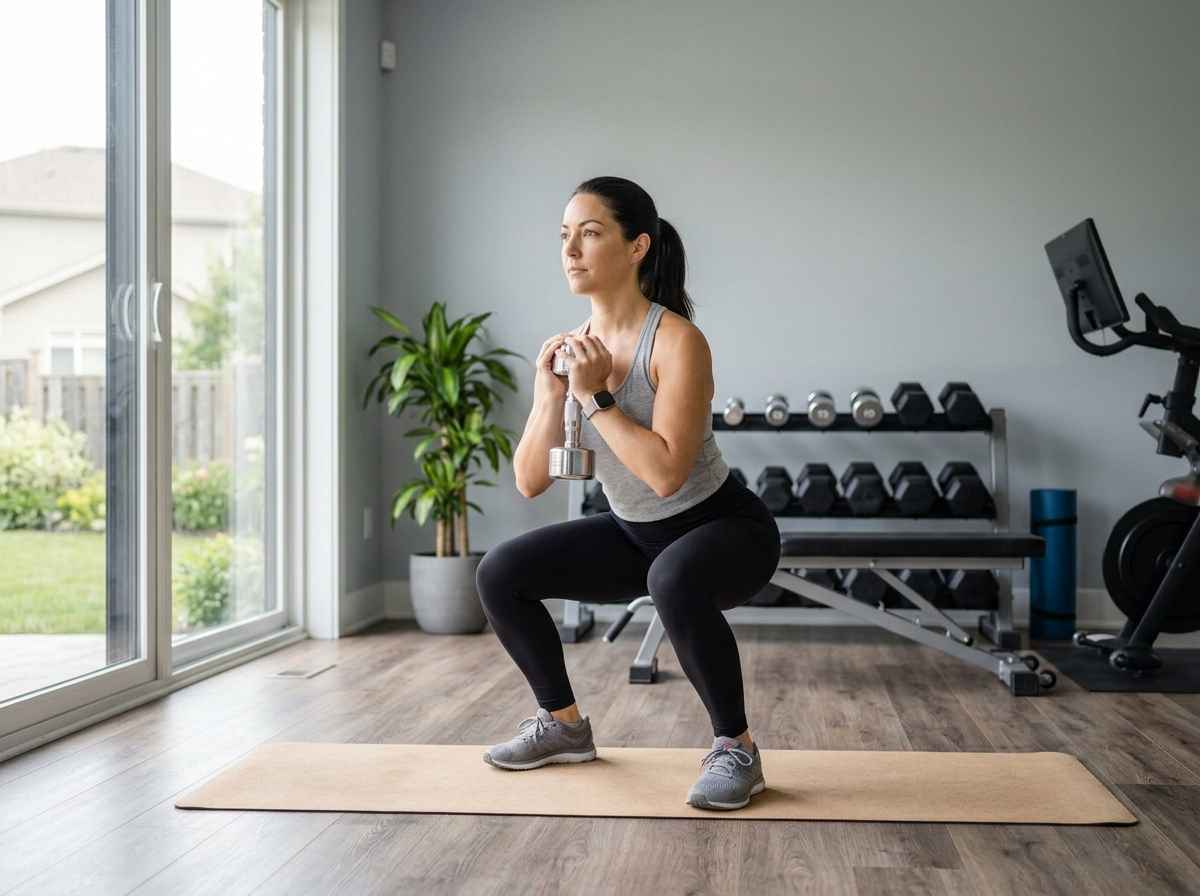
Dumbbell Goblet Squat:
The goblet squat is a lower body exercise that also targets your core and upper body.
How to use:
- Hold one dumbbell straight out next to your chest.
- Place your feet about shoulder width apart.
- Keep your chest nicely upright.
- Bend your knees and lower your hips back.
- Drop down into a comfortable squat.
- Press through your feet to come back to standing.
Suggested repetitions: 8-12.
Keep the movement controlled, rather than trying to squat as fast as possible.
Dumbbell Romanian Deadlifts
Romanian Deadlift The Romanian deadlift works the back of the legs and hips. It also teaches a nice hip hinge movement.
How to do it:
- Hold a dumbbell in each hand.
- Stand up straight with your feet about hip-width apart.
- Maintain slight bend in knees.
- Lower the dumbbells down your legs by moving your hips backward.
- Keep your back in a neutral, comfortable position.
- Get down as low as you can without losing control.
- Push through your feet and drive your hips forward to stand.
Perform 8–12 repetitions.
The movement should be driven mainly by your hips, not your back rounding.
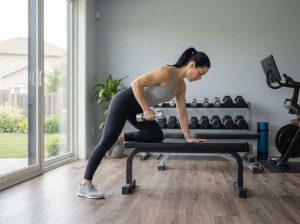
Dumbbell Row on One Arm
Rows build up your upper back and arms and will help you get stronger with pulling.
How to do it:
- Grab a dumbbell in each hand.
- Lean forward comfortably from your hips.
- Keep the back straight.
- Pull the dumbbells into your ribs.
- Suck your shoulder blades together gently.
- Slowly lower the weights.
target 8 to 12 reps
If you have a hard time staying bent over, try a supported one-arm row.
Dumbbell Bench Press
The dumbbell chest press targets the chest, shoulders and triceps.
How to do it:
- Lie on a stable bench or appropriate exercise surface.
- With a dumbbell in each hand.
- Hold the weights at chest level.
- Dumbell press.
- Slowly and in control lower them.
- Repeat.
Do 8 to 12 repetitions.
Use a weight you can handle and don’t lower the dumbbells any further than you can comfortably control.
Dumbbell Shoulder Presses
Shoulder Press This builds upper body pushing strength and works the shoulders and triceps.
Here’s how:
- Sit or stand and relax.
- Hold the dumbbells at shoulder level.
- Keep your core lightly engaged.
- Lift the weights.
- Slowly lower them back to shoulder height.
Try 8-12 reps.
If you feel unsteady standing, then do the exercise seated, with good back support.
Dumbbell Reverse Lunge
Reverse lunges work the lower body, as well as your balance and coordination.
- How to do them?
- Stand tall with dumbbells hanging at your sides.
- Step one foot backward.
- Bend both knees and lower your body.
- Keep your front foot down.
- Push off the front foot to get up.
- Other leg.
6-10 reps each side.
If you have trouble balancing, do it without weight or something stable to hold onto.
Dumbbell Farmer’s Walk
The farmer’s carry is one of the most functional dumbbell exercises because it mimics real-life carrying movements.
How do it:
- Take a dumbbell in each hand.
- Be upright with your shoulders down.
- Keep your core gently activated.
- Move slowly and deliberately.
- Keep your back straight.
- Stop when you think you’ve gone a comfortable distance or time.
Start with 20-30 seconds or a short walk.
Choose a weight that you can keep good posture with.
Calf raise with dumbbells
Calf raises help to strengthen the lower legs and can help to support activities such as walking, climbing and standing.
How to do ’em:
- Hold dumbbells by your sides.
- Stand with feet shoulder width apart.
- Lift your heels slowly.
- Pause a moment at the top.
- Don’t let your heels run wild.
Repeat 12 to 15 times.
If you need more balance, hold on to something steady.
- Dumbbell Step Up
Step-ups work the legs and hips and challenge balance and coordination.
How to do this:
- Stand facing a strong, stable step or platform.
- Hold light dumbbells at your sides,
- Place one foot solidly on the platform.
- Push that foot through, step up.
- Place the other foot on the platform.
- Descend carefully.
- Switch sides.
Start with 6–10 reps on each side.
The platform should be stable and at a height suited to your ability.
Suitcase Carry with Dumbbells
The suitcase carry is walking with a dumbbell in one hand on one side. It tests your grip, your core and your ability to stay steady.
How to do it:
- Hold a dumbbell in one hand.
- Keep your shoulders even.
- Hold the dumbbell close to your side.
- Walk slowly and keep good posture.
- Don’t lean into or away from the weight.
- Change hands and repeat.
20-30 seconds each side!
Begin with a light dumbbell until you get the movement down pat.
For more information, read our article on-Full Body Warm Up Exercises for Your Workout
How to Combine Dumbbell Exercises for a Workout
You don’t have to do all ten exercises in every session.
A basic full-body workout could include:
- Goblet Squats 8-12 reps
- Romanian Deadlifts – 8-12 reps
- Dumbbell Rows (8-12 Reps)
- Press overhead 8-12 repetitions
- Reverse lunges: 6-10 reps/side
- Farmers carries: 20-30 seconds
Begin with 1-2 sets per movement. As you get fitter you can gradually increase the number of sets or the resistance.
Rest between exercises as needed.
Dumbbell Exercises to Support Mobility
Mobility is the ability to control a joint through a functional range of motion.
Strength training is not a substitute for specific mobility work, but exercising through a comfortable range of motion can help you become stronger in various positions.
Squats, for instance, involve a controlled motion of the hips, knees and ankles. Romanian deadlifts are a hip hinge exercise. Shoulder presses are a controlled movement for the shoulders and arms.
Never force a joint into a painful position. Your range of motion should match what you can do at this point.
How Frequently Should You Work Out With Dumbbells?
A good place for many adults to start is with two or more strength-training sessions per week, with recovery between challenging sessions for the same muscle groups.
For starters, shorter sessions and less exercises are recommended.
The fitter you get, the more you can increase your training volume whilst keeping good form.
Recovery is part of your fitness program. Don’t forget. Consistent training can be aided by rest, sleep, hydration and balanced nutrition.
How to Pick the Right Weight for Dumbbells
The best weight depends on the exercise and your current strength.
A good dumbbell should feel hard at the end of a set, but you should still be able to maintain good form.
Consider these guidelines:
- Start lighter when learning a new movement.
- Gradually increase the weight.
- Use different weights for different exercises if needed.
- Stop a set if your technique starts breaking down.
- Do not choose a weight simply because it is heavier.
- Quality movement is more important than lifting the heaviest dumbbell available.
- Common Dumbbell Training Mistakes
- Using Too Much Weight
Heavy weights can make it difficult to maintain control. Start with a manageable load and progress gradually.
Moving Too Quickly
Controlled repetitions can help you focus on the intended movement and maintain better technique.
Disregarding Balance
Some of the dumbbell exercises call for balance. When learning single-leg or carrying drills, start with lighter resistance.
Warm-up Skipping
Doing some light movement for a few minutes can help get your body ready for exercise.
Before your workout, try walking, gentle marching, arm circles and bodyweight movements.
Training through the pain
Sharp or odd pain is not the same as normal muscle effort. If anything feels wrong stop the exercise and seek professional advice where appropriate.
Safety Tips
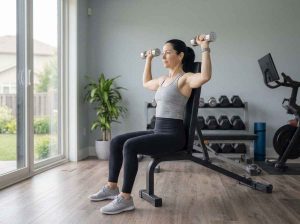
Make sure you have enough space and a stable surface before starting dumbbell exercises.
Safety tips to remember:
- Begin with light resistance.
- Add weight only after learning proper technique.
- Store dumbbells securely when not in use.
- Use stable benches & platforms.
- Keep your movements under control.
- Don’t hold your breath unnecessarily.
- Ensure sufficient recovery between taxing sessions.
- Stop if you feel sharp or different pain.
If you have an injury, medical condition, or concerns about the safety of exercise, consult a qualified healthcare professional prior to starting a new training program.
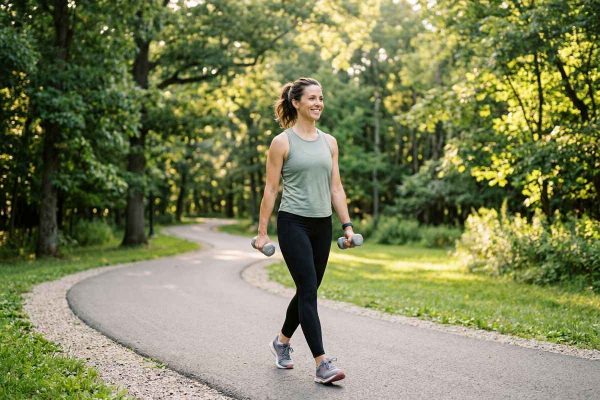
For more information, read our article on-Walking With Weights: How to Begin, Benefits & Tips
FAQ (Frequently Asked Questions)
What are the best dumbbell exercises for strength everyday?
Goblet squats, Romanian deadlifts, rows, presses, lunges and farmer’s carries are all useful choices because they train movement patterns that can relate to everyday activities.
Dumbbells improve mobility?
They are able to help you build strength through a comfortable range of motion. But strength training and mobility training aren’t quite the same thing, so a well-rounded program can include both.
Can a Beginner Do Dumbbell Exercises?
Yeah. Beginners can begin with light dumbbells and simple movements like goblet squats, rows, and farmer’s carries. Learn good technique first, then add resistance.
What weight should my dumbbells be?
Choose a weight that is challenging, but that you can maintain good form throughout the set. Some exercises need other weights.
How many dumbbell exercises should I do per workout?
With around four to six exercises, you can build an effective workout. Choose exercises that target different muscle groups and movement patterns.
How often do I use dumbbells?
Depending on goals, fitness level and recovery, many people can benefit from strength training 2 or more days per week.
You don’t have to go to a gym to do dumbbell exercises.
Yes A set of dumbbells and a safe space to work out can provide enough equipment for many full-body workouts.
Final Thoughts:
Practicing dumbbell exercises can be a useful way to build everyday strength while working on coordination, balance and controlled movement. You can use them at home or in a gym, and you can adjust the resistance as your fitness improves.
Begin with simple movements like squats, rows, presses, lunges, and carries. Before increasing the weight, make sure you maintain good technique and range of motion that is comfortable.
Consistency is more important than trying to lift heavy right away. Dumbbell workouts can be a useful part of a balanced fitness routine if you train regularly, progress gradually, and allow yourself sufficient recovery.