
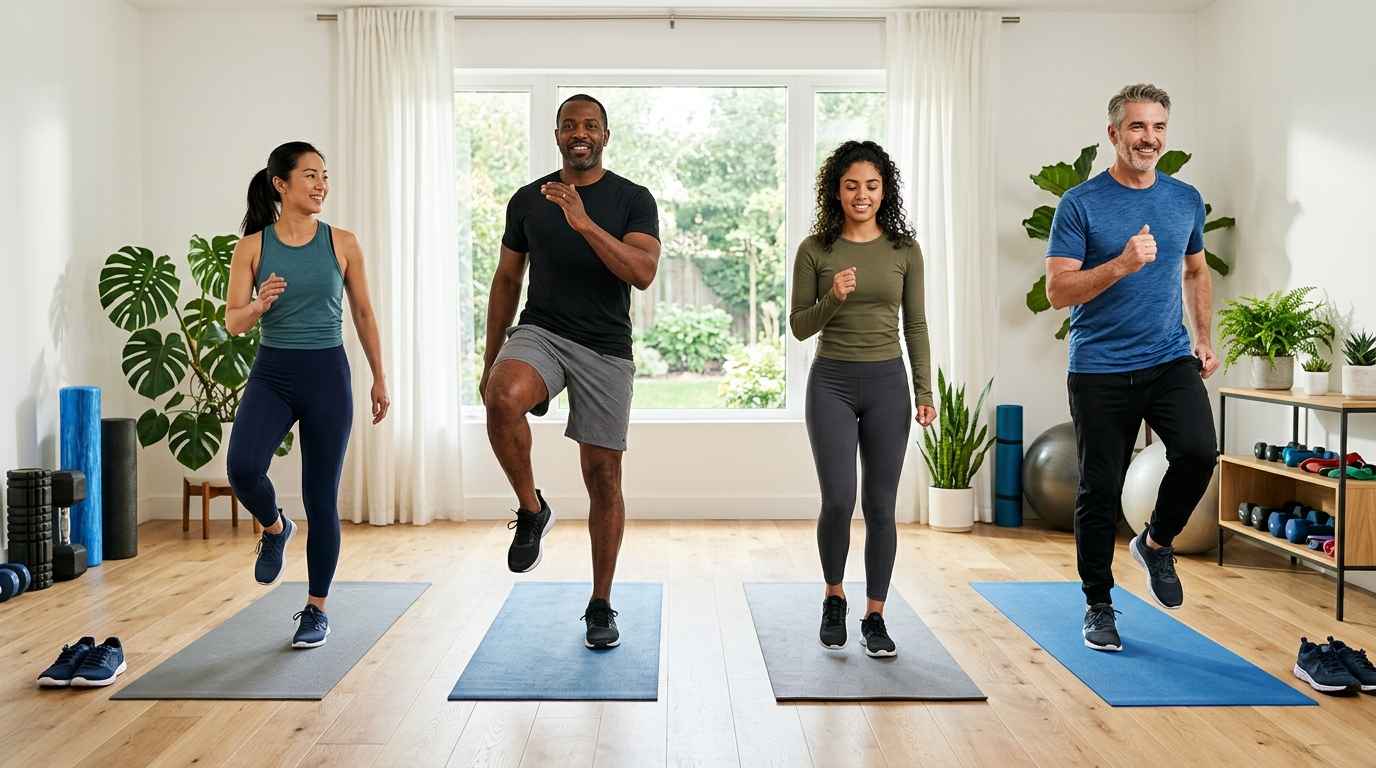
8 Full Body Warm Up Exercises for Your Workout
8 Full Body Warm-up Exercises To Incorporate Into Your Workout Routine
A good warm-up exercises full body can help prepare your body and mind to exercise. A few minutes of moving the major muscle groups, rather than diving straight into a strenuous workout, can slowly raise your body temperature, improve the quality of movement and make you feel ready to exercise.
The best full-body warm-up exercises don’t need to be complicated. Simple movements like marching, arm circles, bodyweight squats and gentle lunges can prepare different parts of your body for action.
You should feel comfortable and in control of your warm up. It’s not meant to tire you out before your actual workout.
What is a full body warm up?
A full-body warm-up is a short period of light movement to get several parts of the body ready for exercise.
Unlike static stretching where you hold a position for a period of time, a dynamic warm-up incorporates controlled movement through comfortable ranges of motion.
A good warm-up can involve movements for the:
- Shoulders and arms.
- Upper Back and Chest
- Hips
- Legs Feet
- ankels
- Core
The warm-up you do will depend on the workout that follows.
For more information, read our article on-10 Healthy Ways To Build A Strong
Why is it important to warm up?
Warm-ups help transition your body from rest to exercise.
As you begin walking your breathing and heart rate gradually increases. Your muscles and joints begin to go through the range of motion needed for your activity.
A warm-up can also help mentally focus you on the workout.
But a warm-up doesn’t have to be long or hard. The point is not to tire, but to train.
8 Full-Body Warm-Up Movements
March in place

march-in-place-warm-
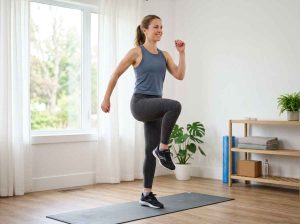
One of the easiest ways to start a warm-up is to march in place.
Stand tall with your feet comfortably apart. Raise one knee up slowly, then lower that knee, and then raise the other knee. Move with a natural swing of the arms.
If it feels comfortable, keep the movement controlled and gradually increase your pace.
Works: Legs, hips, shoulders and cardiovascular system.
Warm-up tip: Start off slowly and increase your activity gradually for the first minute.
Arm Circles (Arm Circles)
arm-circles-warm-up-exercise
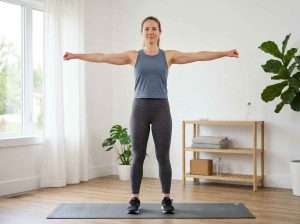
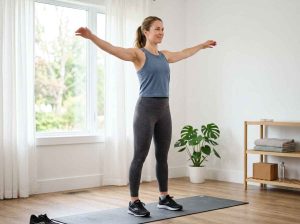
Arm circles can help get your shoulders and upper body ready to move.
Stand at ease, with your arms extended out or bent slightly. Make little circles with your arms and slowly increase the size of the circle if it feels comfortable.
Then go both directions.
Don’t swing your shoulders through a big range of motion.
Works: Upper arms and shoulders.
Warmup Tip: Don’t try to make the circles as big as possible, keep the movement smooth.
Squats (Body weight)
bodyweight-squats-warm-up
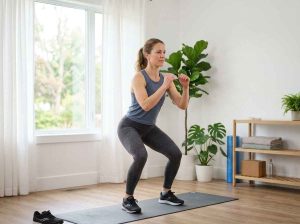
Bodyweight squats are a great way to get your hips, thighs and knees ready for activities that involve bending and pushing through your legs.
Stand with feet approximately hip to shoulder width apart. Drop your hips and knees while holding your chest comfortably up. Go down only as far as feels controlled, then return to standing.
You do not need to squat deep to warm up.
Works: hips, thighs, glutes, core
Warm up tip: Ease of movement and depth that feels good are the focus—not speed.
Hip rotations
hip-rotations-warm-up-exercise
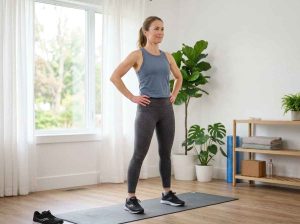
Hip circles are a gentle movement around the hips.
Feet comfortably apart. Place your hands on your hips and slowly rotate your hips in a circular motion.
Draw a few circles in one direction . Change the direction .
Works:Hips and surrounding muscles.
Warm up tip: Don’t push the range of motion, make the circles comfortable.
Alternating Reverse Lunge
reverse-lunge-warm-up-exercise
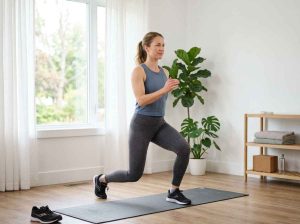
Reverse lunges can help prepare the legs and hips for activities that require stepping and changing direction.
Get in a comfortable position. Move one foot back and bend your knees slightly. Push off the front foot to get back to the start position, then change sides.
If you are a beginner, don’t go too deep into the lunge.
Works : legs, hips and glutes.
Warm-up tip: Hold onto something steady if you need help balancing.
Torso Rotations—Standing
standing-torso-rotations
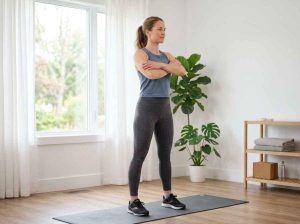
Standing torso rotations. This is a mild way to move the upper body side to side.
Stand with your feet comfortably apart and your arms relaxed or lightly crossed over your chest. Twist your torso to one side and return to center before twisting to the other side.
Don’t force the rotation . Keep your hips relatively stable .
Works: Upper and lower body.
Warm-up tip: Move slowly from side to side, rather than swinging rapidly.
Rocking from heel to toe
heel-to-toe-rocking-warm-up
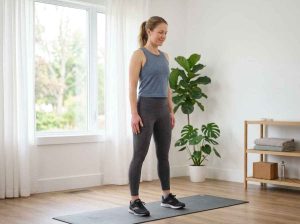
Heel-to-toe rocking is a great way to mobilize the ankles and lower legs.
If necessary, stand by a wall or some other stable support. Gradually transfer your weight to your toes, and then back to your heels.
Make your movements controlled and comfortable.
Works: on ankles, calves, and lower legs.
Warming up tip : This can be particularly useful before activities that involve walking, running, jumping or changing direction.
Step Touch With Arm Movement
step-touch-arm-movement-warm-up.
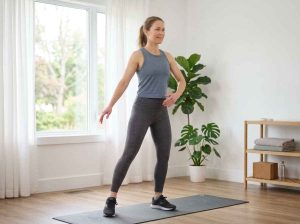
Step-touch moves are a simple way to put together upper and lower body movement.
Step one foot out to the side, and bring the other foot up next to it. Repeat on the other side. Add comfortable gentle arm moves.
You can increase the pace a little bit at a time without turning the warm-up into a hard workout.
Works: Legs, hips, shoulders, co-ordination.
Warm-up tip: Keep the intensity low so you still feel fresh for the main workout.
For more information, read our article on-Core Workouts for Every Fitness Level
How to Combine These Warm-Up Exercises
You don’t necessarily have to do all eight exercises before every workout.
A simple sequence might look like this:
- March on the spot
- Arm circles
- Hips circles
- Squats with bodyweight
- Reverse lunge
- Torso rotation
- Rocking heel-toe
- Step-touch.
Do the sequence at a comfortable pace and change the exercises according to the activity you are about to do.
For instance, more gentle movements of the legs and hips could be good for a lower-body workout, while an upper-body workout could have more shoulder and arm movements.
How long should a warm up be?
There is no one warm-up length that works for all.
If you are going to be doing light recreational activity a short warm-up may be enough but a more strenuous work-out or sport may require more preparation.
Notice how your body feels, not just the clock.
A good warm-up should make you feel more and more ready to move, but not tired.
Static Stretching vs. Dynamic Warm-Up
Dynamic movements and static stretching have different goals.
Dynamic warm-ups are controlled movement. Some examples include:
- Marching
- Arm whirls
- Squats with body weight
- Lunges (soft)
- Step slide
These movements might help prepare your body for the subsequent activity.
Static Stretch
Static stretching is when you hold a muscle in a stretched position.
It can play a part in flexibility training, but a warm-up doesn’t have to be mainly long-held stretches.
Gentle dynamic movement is a practical way of preparing for exercise in many activities.
Ready for any workout?
Warm-up can be beneficial for many types of exercise, especially those involving moderate or vigorous movement.
The first few minutes for simple activities are naturally a gradual warm-up.
The important principle is to avoid a sudden transition from absolute rest to strenuous physical activity.
How to Improve the Effectiveness of Your Warm-Up
Start simple
Start with simple movements and gradually increase your activity level.
Controlled Movements
Take your time on the exercises. Generally better to do smooth movements than try to get as many reps as possible.
Match the Warm-Up to the Exercise
Choose movements that are similar to the activity you’re going to do.
Prevent Tiredness
The warm up is designed to prepare not wear you out.
Be Mindful of Discomfort
Mild effort is normal, but sharp or unusual pain is not something to push through. If the movement feels wrong, stop it.
Warm-up common mistakes
Starting Too Soon
A high intensity start can defeat the point of a gradual warm-up.
Overdoing It
A warm-up is not meant to be a full workout.
Ignore the Upper Body
Even a lower-body workout can work out the arms and upper body, especially if you’re running or playing sports.
Forced Ranges of Motion
You don’t have to push the joints and muscles to their limit.
Copying Someone Else’s Routine
People have different levels of fitness, movement ability and activities. Warm up as you should.
When do you quit?
Warm-up should be manageable. If you have symptoms that concern you, including chest pain, fainting, severe dizziness or trouble breathing, stop exercising and tell a trusted adult or seek appropriate medical attention.
If you have an injury or health condition that affects exercise, a qualified healthcare professional can help you select appropriate movements.
For more information, read our article on-Easy & Healthy Whole 30 Snacks
The conclusion is that
The best full body warm-up exercises are controlled, simple movements that gently prepare your body for physical activity.
A good place to start is marching in place, arm circles, bodyweight squats, hip circles, reverse lunges, torso rotations, heel-to-toe rocking, and step touches.
Your warm-up should not be a workout. Focus on moving comfortably, getting ready gradually and working on exercises that are relevant to the activity you are about to do.
A good warm up can be an easy part of a fun and well-rounded workout.
Common questions
What are the best whole-body warm-up exercises?
Simple options that involve different parts of the body include marching in place, arm circles, bodyweight squats, hip circles, reverse lunges, torso rotations, heel-to-toe rocking and step touches.
What is the duration of a full-body warm-up?
Warm-up requirements depend on the activity and the individual. Some activities just require a bit of gentle movement for a short period of time, while others that are more strenuous might require additional prep.
“Warm-up exercises should be hard?
Nope. A warm up should prepare you for exercise, not tire you out. Keep movements controlled and increase activity gradually.
Walking is a great warm-up.
Yes. Gentle walking or marching can be a useful way to increase movement gradually before more demanding exercise.
Work out stretches?
Gentle movements can be helpful before many workouts. Static stretching can be part of flexibility work, but you don’t have to push a deep stretch before working out.
These warm-up exercises are great for a beginner.
Yes. Many of these exercises can be modified for different fitness levels. If you’re a beginner, take it slow and use a range of motion that is comfortable.
It’s a good idea to warm up before strength train.
Warming up slowly can help prepare your body for strength training. Begin with light movements and, when it makes sense, easier forms of the movements you’ll be doing.
But what if a warm-up exercise is painful?
If you feel any sharp or unusual pain, stop what you’re doing. Do not force painful range of motion. 7. If pain persists, or if you have concerns about an injury, seek appropriate professional advice.




3 thoughts on “8 Full Body Warm Up Exercises for Your Workout”
Comments are closed.