
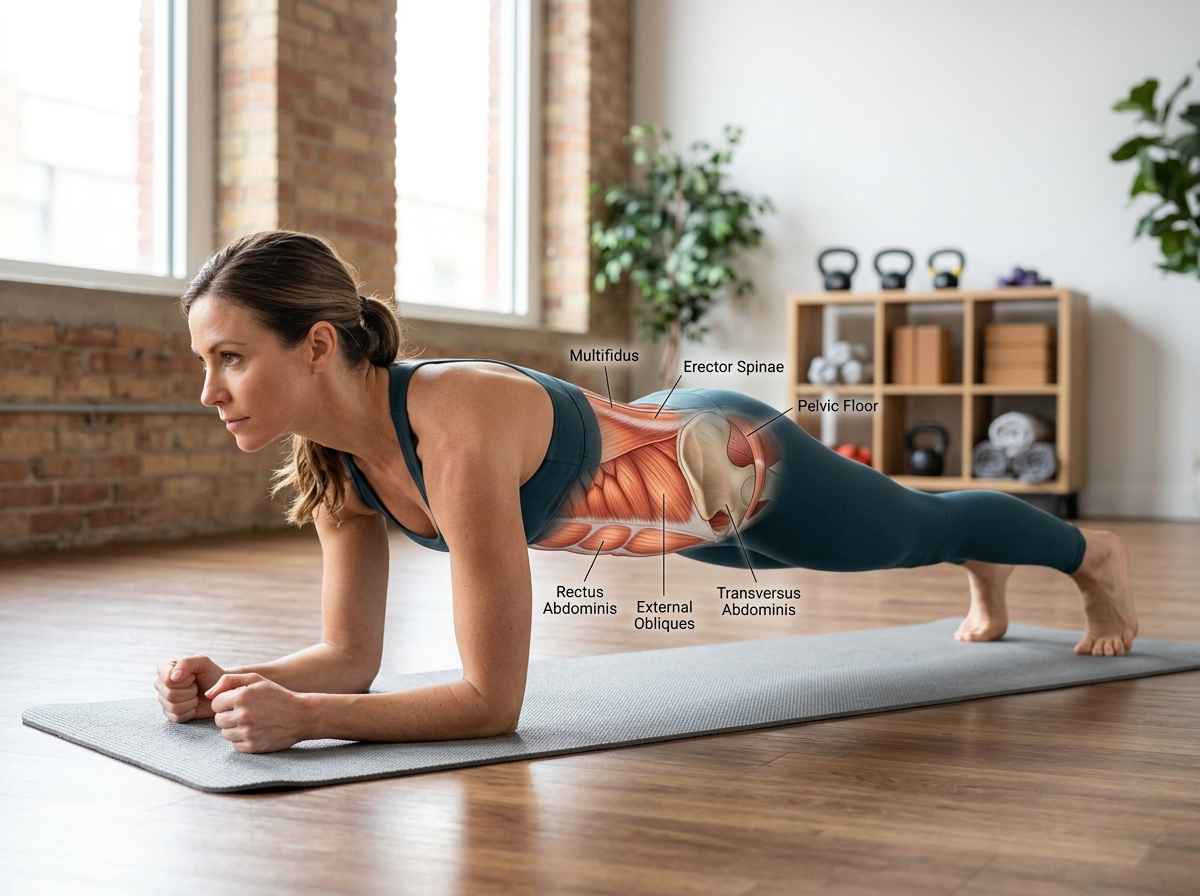
Core Exercises for Every Fitness Level, A Beginner to Expert Guide
Core Workouts for Every Fitness Level: A Beginner’s to Expert Guide
Core workouts for every fitness level involve much more than just building visible abdominal muscles. Your core maintains your body’s balance when you walk, lift, bend, run, and during many daily activities. Strong core strength can also help with balance, posture, movement control, and how well you perform during exercises.
The good news is that core exercises are adaptable for beginners, intermediate exercisers and people who have more training experience. You don’t need fancy equipment or a gym membership to start. There are plenty of good exercises you can do at home with your own body weight.
In this guide you’ll learn how to build a core workout for your fitness level and how to safely progress it over time.
What is Your Key Response?
The abs are not the core. It’s a group of muscles that work together to stabilise your body around your abdomen, lower back, pelvis and trunk.
Some of the major core muscles include:
- Abdominal Rectus
- Transversus Abdominus
- Internal & external oblique
- Other muscles that stabilise the spine (multifidus)
- Pelvic and hip muscles
These muscles work together when you maintain your posture, turn your body, stabilise your spine, or transfer force from your upper body to your lower body.
So, a complete core workout will encompass exercises that challenge stability, controlled movement, and different movement directions.
Why is core strength important
Since the core is involved in many everyday movements, training the core can be beneficial for people of all fitness levels.
Improves Posture
Strong trunk muscles will allow you to sit, stand, walk and exercise with a stable position. Core training is no magic cure for all postural issues, but can help with movement control.
Enhances Balance and Stability
Your core is what keeps your body stable when you move your arms or your legs. Exercises such as bird dogs and dead bugs challenge this in a controlled way.
Encourages Daily Movement
Bending over, picking up groceries, getting up from a chair, climbing stairs and reaching overhead all require some degree of trunk stability.
Improves Exercise Performance
A strong core can help transfer force between your upper and lower body during activities such as running, cycling, strength training and recreational sports.
No training equipment required
Many core exercises for all fitness levels are body weight. This makes core training perfect for home workouts and beginners.
Beginner Core Exercises
If you are new to exercising, start with exercises that allow you to focus on your breathing and the control and correction of technique. You don’t have to dive right into the hard stuff.
Pulling in your stomach
A simple way to learn to engage your core is to practise abdominal bracing.
How to do it:
Lie on your back with your knees bent and feet flat on the floor. Maintain a comfortable neutral spine. Tighten your abdominal muscles as if you are bracing yourself for a light blow.
Keep breathing normally but stay slightly contracted.
Hold for 10 to 20 seconds and then relax and repeat several times.
Newbie tip: Don’t hold your breath and suck your stomach in as much as possible. The idea is to engage it. But to control it.
For more information, read our article on- 10 Healthy Ways To Build A Strong,
Dead Bug

beginner-dead-bug-core-exercise
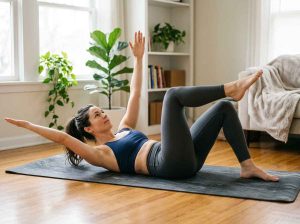
The dead bug is a great beginner exercise to learn core stability with moving arms and legs.
How to get the job done
Lie on your back, knees bent, arms up toward ceiling. Hold your torso still and slowly lower one arm and the opposite leg to the floor.
Repeat on the other side, going back to the beginning.
Do 6–10 reps per side.
If you have difficulty maintaining control, move your limbs through a smaller range.
The Bird Dog
bird-dog-core-stability-exercise.j
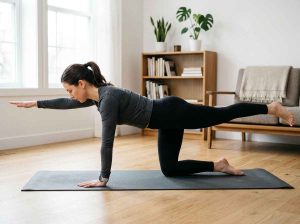
Bird dog is a good exercise for coordination and trunk stability.
How to Do It
Start on your hands and knees. Keep your back in a comfortable neutral position. Slowly lift one arm and the opposite leg.
Stop, return to start position and change sides.
Do 6-10 controlled reps on each side.
Do not twist your hips but extend your arm and your leg.
Bridge your glutes
The glute bridge is for your glutes, but you also need trunk stability.
Lie on your back, knees bent, feet flat on the ground. Press down through your feet and raise your hips until your body makes a comfortable straight line from your shoulders to your knees.
Pause a moment, and then slowly lower.
Do 8–15 reps.
Intermediate Core Exercises
Once basic exercises become comfortable, you can gradually increase the challenge. Intermediate training should still prioritize control rather than simply performing more repetitions.
Plank on Forearms
proper-forearm-plank-core-workout
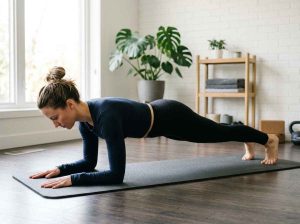
The plank is one of the most familiar core exercises, but it can be adapted to suit the fitness level of the person doing it.
How to Do It
Position your forearms on the floor and your elbows directly underneath your shoulders. Send your legs back behind you and balance on your feet and forearms.
Keep your body in control, not too low in the hips or too high.
Start with 15-30 seconds and increase the time as your control improves.
Also, you can do a plank from your knees if a full plank pose proves too difficult.
Twisted Plank
Side planks exercise the muscles along the sides of your trunk.
Lie on your side with your forearm beneath your shoulder. Keep your body aligned as you lift your hips.
Hold each side for 10–30 seconds.
To make it easier keep your bottom knee on the floor.
Reverse crunches
Reverse crunches work the abs, but also require you to control the movement of your pelvis.
Lie on your back with your knees bent. Slowly pull your knees toward your chest and raise your hips off the floor.
Bring it back down.
Perform 8-12 reps.
Do not swing your legs using momentum.
The Mountain Climber
Mountain climbers engage core stability with dynamic movement.
Begin in a high plank position. Slowly bring one knee to your chest, then back. Alternate legs keeping your upper body stable.
The beginner can do the movement slowly . A more experienced exerciser can move faster and still have good form.
Core workout advanced
It’s not that advanced exercises are automatically better. They pose a greater challenge and may require more strength, coordination and control.
If you are able to do the intermediate exercises with ease and good technique, then you might want to consider moving on to more difficult variations.
Plank Shoulder Taps
advanced-plank-shoulder-taps-exercise
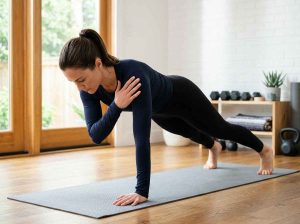
Begin in a high plank position. Try to keep your hips as stable as you can, lift one hand and gently tap the opposite shoulder.
Put your hand back on the floor and repeat on the other side.
Taps Total 8-16.
The most important thing is to eliminate any unnecessary movement through your hips.
Hollow Body Position
The hollow body hold tests the abdominal muscles and overall trunk control.
Lie on your back, and slowly lift your shoulders and legs to a controlled position. Rest your lower back comfortably against the floor.
Go slow, hold for 10-20 seconds.
If the full version is too hard, bend your knees or keep your arms closer to your body.
For more information, read our article on-Listen to Your Body: Breaking Free From Diet Culture
Slow Bicycle Crunches
Bicycle crunches are great for strengthening your obliques and abs.
Lie on your back with your knees bent and your hands on your head lightly. Bend one elbow to the opposite knee and extend the other leg.
Alternate sides slowly.
It is about rotation controlled, not speed.
Leg Lift Plank
Start in plank position. Slowly lift one leg a small distance off the floor keeping your trunk stable.
Drop it down and change sides.
Perform 6 to 10 reps for each leg.
When you lift your leg, do not rotate the pelvis.
How to Make a Core Workout for Your Fitness Level
You don’t have to do all the exercises at a session. Simple routines can include exercises from various categories of movement.
Beginner Routine
try
- Abdominal bracing – 15 seconds x 3
- Dead bug: 2 x 6 on each side
- Bird dog: 2 × 6 each side
- Glute bridge 2 x 10 reps
Intermediate Standard
Try to:
- Forearm plank 3 x 20-30 seconds
- Side plank – 2 x 15-30 seconds each side
- Reverse crunch: 2 x 10 reps
- Mountain climbers: 2 x 10 per side
Advanced Plan
Try it:
- 3 x 10 each side Plank shoulder taps.
- Hollow body hold: 3 x 15-20 seconds
- Slow bicycle crunches 2 × 10 each side
- Plank leg raises: 2 × 8 each side
These are examples, not requirements. You should train according to your present capacity and need for recovery.
How Often Should You Train Your Core?
For many people, 2-3 core sessions a week can be enough when combined with other physical activity.
You don’t necessarily have to train your core every day. And your muscles also get to recover.
A core session can be brief. Even 10-20 minutes can be useful training if the exercises are done with good control.
You can also include one or two core exercises at the end of a more general strength training session.
The most important is consistency. Overall, a manageable routine that you can do regularly is more practical than an extremely difficult routine that you can’t maintain.
Progressing Your Core Training
Progression means gradually increasing the difficulty of an exercise.
- How do you proceed?
- EXTENDING THE HOLD TIME
- Incorporating Controlled Repetitions
- Adding more sets.
- Using a harder variant
- Increase range of motion
- Deceleration of the movement
- Technique and control improvement
You might start with a knee plank, then progress to a full plank, then move to plank shoulder taps.
Don’t bring up everything at once. One factor at a time, slowly but with good form.
Training Mistakes with Common Core
Simple exercises too if not done with control, become less effective.
Holding your breath.
And when doing core exercises, remember to keep your breathing even. If you hold your breath, the exercise can become uncomfortably difficult.
Using Momentum.
Fast uncontrolled movements can distract from the desired muscles. Slow down when needed.
Training the Abs Only
A balanced core workout should include front, side, back and overall trunk stability exercises.
Too Much, Too Soon
Advanced exercises are not needed for beginners. Lay the foundation first and build upon it gradually.
Discomfort Ignored
Sharp or persistent pain is not the same as normal muscle effort. Stop any activity that causes significant pain and consider consulting a qualified health or exercise professional.
Fitness in Everyday Life Core Exercises
Core strength is good for more than just the gym. Your trunk helps keep your body stable in everyday activities.
Carrying a school bag, lifting a light object, walking, climbing stairs or reaching for something all use your core muscles.
But core exercises are just one part of the fitness puzzle. In addition to a good routine you’d also want to have aerobic activity, strength exercises for major muscle groups, mobility work, good rest, and healthy food.
If you are new to exercise start with activities that you can do comfortably and gradually increase your overall level of activity.
Core Training Safety Tips
Consider your current fitness level and any physical limitations you may have before starting a new exercise program.
Follow these simple safety rules:
- First, warm up.
- Learn the movement before you increase the intensity.
- Keep your movements controlled.
- Breathe normally.
- Allow your body to heal.
- If you feel a lot of pain, dizziness or other strange symptoms, stop.
- If you have an injury or medical condition, check with a qualified health professional about suitable exercise.
Remember, it’s not the number of reps that matter, it’s the technique.
Frequently Asked Questions on Core Exercises
How long does a core workout last?
If you want to get a core workout in, then you can do it in 10-20 minutes if you stay focused. How long you do it for is down to your fitness level, the exercises you choose and your overall workout routine.
Can core exercises improve posture?
Core training helps develop trunk strength and movement control which may help posture. However, posture is influenced by many factors including mobility, habits, ergonomics, and individual anatomy.
Should I do core work every day?
Most people don’t need to train their core every day. It can be helpful to allow for recovery between tough sessions. Two to three times a week fits in easily with many workout routines
Are planks adequate for core training?
Planks are helpful , but one exercise may leave your routine limited . For more variety combine exercises that work front, side and general trunk stability.
Can beginners do advanced core exercises?
Eventually, beginners can work their way up to more advanced exercises, but they should first establish basic strength and movement control. Begin with a simpler variation and then continue.
Concluding Remarks
For people of all fitness levels, core exercises can help you develop a more robust and stable base for regular exercise and movement. While intermediate and advanced exercisers can progressively introduce planks, hollow holds, and more difficult variations, beginners can begin with basic exercises like dead bugs and bird dogs.
Selecting the most difficult exercise is not crucial. Instead, pick an exercise that you can do safely and with good control, then as your fitness increases, progressively increase the difficulty.
A balanced approach to fitness can be supported by a regular core routine, strength training, regular exercise, a nutritious diet, and sufficient recuperation.




4 thoughts on “Core Exercises for Every Fitness Level, A Beginner to Expert Guide”
Comments are closed.